Creating a Test Project
The 1972 Nixon-Kosygin accord on space was the watershed in bilateral discussions between NASA and the Soviet Academy of Sciences. Both the Low-Keldysh agreement on space science and applications and the test mission now had the official imprimatur of the two respective governments. Prior to the Summit, work on the mission had been managed by NASA’s advanced planners, but now that the decision had been made to fly, the mission planners, the flight operations staff, and the engineering and development personnel—a large and to a great extent new team of individuals-took the prime roles.
On 13 June 1972, Dale Myers sent a memorandum to the Center Directors at Cape Kennedy, Huntsville, and Houston, outlining the organizational policy decisions that had been made in preparation for the July plenary meeting with the Soviets. The Apollo-Soyuz Test Project* was scheduled for mid-1975. With a Saturn IB, the Americans would launch command and service module (CSM) 111, reserving CSM 119 as the backup vehicle, if it were not flown during Skylab.1 Myers advised the centers that effective 11 June the management of the joint project had been transferred from the Office of Advanced Missions to the Apollo Program Office. Philip Culbertson and his staff were directed to assist Rocco A. Petrone and the Apollo team. In Houston, work on modifying the CSM would be handled by the Apollo Spacecraft Program Office, under the direction of Owen G. Morris. Glynn Lunney, who had been assigned as Special Assistant to Morris the preceding March, was given primary responsibility for overseeing ASTP. Preparation of the Saturn IB launch vehicle would be carried out by the Saturn Program Office at the Marshall Space Flight Center (MSFC), and all launch related activities would be the responsibility of Kennedy Space Center (KSC).2
* Although used unofficially after the May Summit, Apollo-Soyuz Test Project did not become the official designation for the joint Soviet-American flight until 30 June 1972.
During May, René Berglund had suggested to Chris Kraft that Glynn Lunney be given the responsibility for managing the ASTP contract with North American Rockwell. Berglund thought that the task of negotiating with the Soviets and the spacecraft contractor should be in the hands of a single individual and organization.3 Lunney seemed to be the logical choice on the American side for directing the development of the mission and the spacecraft hardware, as well as managing the U.S. negotiations with the Soviets. At age 36, Lunney had worked with first NACA and then NASA for 17 years, coming to Houston in 1962. At MSC, Lunney had been a flight director for the Gemini IX through Gemini XII missions and filled a similar role in ten of the Apollo flights, being the lead flight director for the unmanned AS-201 flight, Apollo 4, which was the first launch of the Saturn V, and the manned voyages of Apollo 7 and 10. As Chief of the Flight Directors Office, Lunney gained national recognition as the leader of the team that worked out the return trip plans for the Apollo 13 crew following the inflight explosion that incapacitated the electrical and oxygen systems of their service module. His performance during those trying days and during the early negotiations with the Soviets had indicated to the Manned Spacecraft Center’s (MSC’s) Director that Lunney was the individual to manage ASTP for NASA.4
Glynn Lunney and his colleagues worked hard to structure a basic organizational plan for the next joint meeting. They hoped that the working procedure developed in Houston at that summer session would serve as a model for the many meetings that would follow. Included in Lunney’s plans was a proposal for a more detailed schedule of activities for the next three years and a scheme for documenting in English and Russian all technical agreements. The American plan for documentation suggested two series of reports that would be approved jointly and signed by the appropriate Working Group members and the Project Technical Directors. ASTP Documents would codify the basic understandings for conducting the mission, while Interacting Equipment Documents would record specific technical data required to ensure compatibility, lay out test plans, and present hardware specifications and drawings in standardized format.
One presentation, the “Proposed Operating Plan for US/USSR Meeting on the Apollo/Soyuz Test Project, Houston, Texas, July, 1972,” was typical of the work done in Houston. Besides this document, which outlined the scope of each working session, tentative agendas and milestones for the various discussions were also presented.5 Other pre-meeting documents considered such logistical matters as transportation between the Soviets’ motel and the meeting sites, plans for refreshments and meals, public affairs arrangements for photographs of the groups at work, as well as assignments for interpreters, translators, and Russian language typists. Similar attention was given to preparing after-work activities for their Soviet guests.6
Efforts put into arranging the summer meeting were indicative of the NASA way of working. As the frequency of the joint negotiations increased and as the size of the NASA team expanded, so did the amount of paperwork and the number of briefings and reviews. The pyramid, which reached its apex in Lunney’s office, expanded downward at MSC to include engineers and specialists in nearly every division. Fifty-eight key individuals were invited to a 2-hour ASTP briefing on 13 June. Starting with Director Chris Kraft, his deputy Sigurd Sjoberg, and their technical assistant George Abbey, the list of invitees included nearly all those directorate and division chiefs whose organizations would participate in or support the joint mission. Donald K. Slayton, Director of Flight Crew Operations, and his deputy Tom Stafford, attended the briefing, as did Alan Shepard, Chief of the Astronaut Office. Also present were the chiefs of the Flight Crew Integration, Crew Training Simulation, and Crew Procedures Divisions. Flight surgeons and members of the medical research team were on hand. From the Engineering and Development Directorate came Max Faget, accompanied by his division chiefs. The Flight Operations Directorate was represented by flight controllers, computer analysts, landing and recovery specialists, mission planners, and the flight support team. In addition to these individuals, Apollo Program Office, Skylab Program Office, and Science and Applications Directorate representatives were there.7
This June briefing was a method of getting the word out; each division chief would in turn inform his subordinates of the tasks that lay ahead. As those tasks were apportioned, the number of memoranda and reports would increase dramatically as the various teams kept their colleagues informed of their progress. Distribution lists were compiled and periodically revised, and reams of paper were fed into photocopying machines. All the paper that was circulated had a purpose-to get the job done and see that all the work expended was as efficient as possible among such a large group of people. MSC was now doing what it had been established to do-plan, develop, and fly a manned mission in space. This briefing was just one step in ensuring “a more widespread understanding of [the] project,” which Glynn Lunney believed to be “very important to [the] timely, successful execution” of ASTP.8
While preparations for the joint meeting progressed, the Apollo Spacecraft Program Office completed contractual arrangements with North American Rockwell.9 On 30 June, the Procurement Office mailed a letter contract* to North American containing a statement of work. Basic tasks included the necessary modifications to CSM 111, essentially the same type of spacecraft flown on Apollo 12, 13, and 14, so that it would meet the requirements of ASTP. North American also agreed under this contract to develop and fabricate the docking module (DM), docking system, and the support structure for the DM in the spacecraft lunar module adapter. In conjunction with the engineering, fabrication, and assembly, the prime contractor was further assigned major portions of the ground testing for the CSM, DM, and docking mechanism and a host of other activities that were necessary to prepare the spacecraft and its systems for the flight and to check it out after the mission. William B. Bergen, President of the Aerospace Group, accepted the contract on behalf of North American Rockwell on 6 July, the day the Soviets arrived.10
* This letter contract was a ninety day commitment on the part of NASA, issued to start the described engineering and manufacturing. A negotiated and definitive contract was issued on 6 Oct. 1972. A fuller account of the contracting activities is presented in source note No. 9.
JULY IN HOUSTON
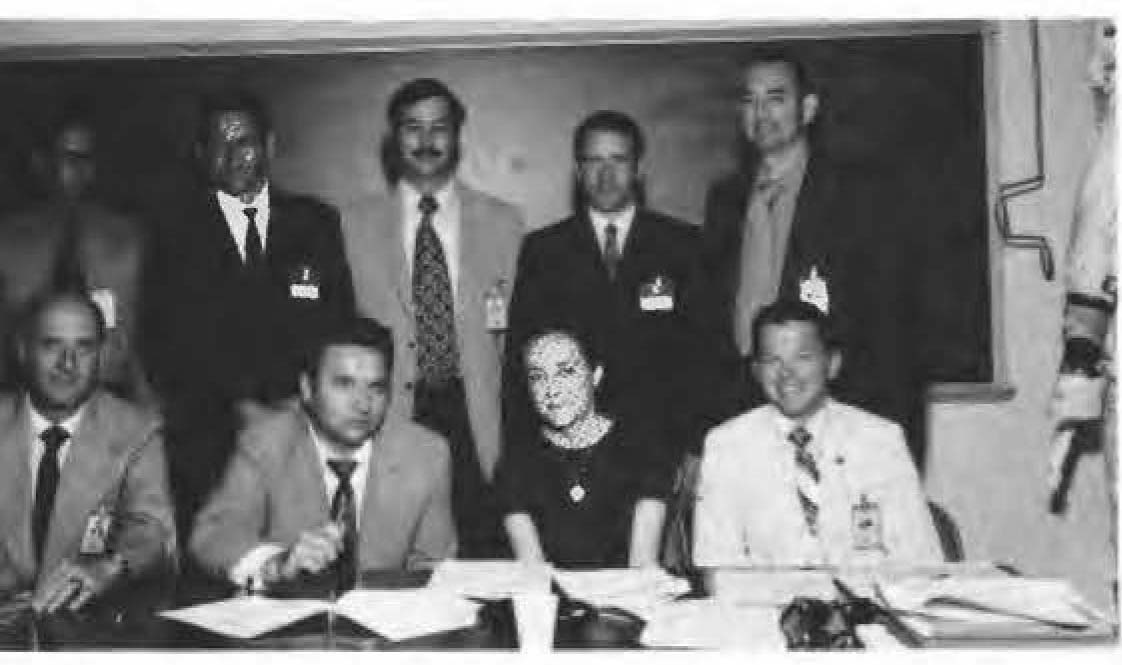
Between 6 and 18 July, the days were busy ones for the ASTP Working Groups. Each group had a full agenda that it wished to see completed, but the work went slowly-at some points tediously-because of the language barrier. M. Pete Frank, chairman of Working Group 1, for example, recorded in his notes:
- Don’t seem to be able to complete anything quickly.
- Spent a lot of time on correcting or modifying unimportant trivia.
- Translations cannot be trusted....
- Russian language takes about twice as long to say as does English.
- Much time was spent trying to understand jargon....11
R.H. Dietz, commenting on the communications equipment talks, stated, “It was found that diagrams, pictures, etc., were very useful in our discussions. In fact, the written word would cause many hang-ups, but when a picture or diagram was used, immediate understanding usually resulted. This applies to both sides.”12 As the two teams became more deeply involved in the nitty gritty details of laying out a flight, specificity of meaning and complete understanding of the other side’s approach were essential. And they were difficult.
Some Americans found this laborious point-by-point negotiating frustrating, having brought to the meetings expectations about how much work needed to be accomplished and at what pace. But the Soviets introduced a different perspective to the same sessions. Glynn Lunney later reflected on this problem:
we had the experience at a couple meetings in the beginning where we would be planning to cover certain ground, and from our point of view it seemed that they were not quite as prepared or ready ... as we were. Again in retrospect, we have consistently had the same class of problems when we deal with new contractors, in the sense that when we get on board with a contractor we all have a certain way of doing business.... And after a while we come to take it for granted and expect everyone else to know what it is....To some extent we had that kind of problem in ASTP in the beginning.13
While the Soviets would have to master the NASA method of working a problem, the Americans also had to prepare themselves for the surprises that their counterparts could spring. Several individuals at MSC were still trying to adapt to the switch from Salyut to Soyuz when they learned almost by accident that the Soviets planned to have two spacecraft ready for launch to ensure mission success.
There had been considerable discussion during the first day’s negotiations in Working Group I about who should launch first-Apollo or Soyuz. Clarke Covington recalled the events leading up to the discovery of the two Soyuz spacecraft and launch vehicles. “We had drawn up a proposed mission plan that showed Apollo going first ... primarily because Apollo had extended mission time when compared to Soyuz; 11, 12, 13, 14 days. They had this man-day limitation which limited them to about 4 days plus a day margin.” Having taken this difference in capability into account, the MSC mission planners figured that Apollo should launch first; then it could wait for the Soviets if their first launch attempt were unsuccessful. According to Covington:
They came in with a plan where Soyuz was launched first. We discussed this for several hours, not really knowing or understanding their reasons. They went through a lot of flight mechanics type [explanations]. All of our Working Group 1 people were ... trying to understand why they wanted to go first. It was really ...illogical. We were convinced, this was privately, that they had a fear of failure.14
At the end of the day, Covington received a copy of the Soviet “Project Technical Proposal” in Russian. Believing that he ought to know what was in that document before starting the next day’s discussions, he went looking for a translator. Covington talked Ross Lavroff, one of the interpreters working with MSC, into orally translating it. They went to Covington’s office at about eight in the evening, and Lavroff began the all-night task. After several hours, Covington heard Lavroff read something to the effect that the Soviets proposed to launch Soyuz, which would be followed by the launch of Apollo. Should all possible alternative launch attempts prove unsuccessful, the first Soyuz would deorbit, and the second one would be prepared for launch. Since there had been no mention of a second Soyuz during that first day of talks, Covington asked Lavroff to read that part again. Surely, he had mistranslated; there must be another way of interpreting that passage. Lavroff read it again. If the first Soyuz has to come down, then the second will be launched. Covington was astonished.
Early the next morning, Covington cornered Lunney before he began his “tag-up” staff meeting, which preceded each day’s negotiations, to tell him that the Soviets had not one but two Soyuz craft and launch vehicles allocated for ASTP. Lunney, also amazed, said that he would indeed ask the Soviets about this interesting piece of news. At the morning session, the Soviets responded. Yes, they would have a second Soyuz ready for launch. American Working Group 1 members just “sat around dumbfounded. ...” Covington said, “that totally cratered our argument as to the need for Apollo to go first. If they are willing to launch two spacecraft then there wasn’t any reason why they should not go first.” But why had they not revealed the details in the beginning? No one at MSC ever knew why; they just accepted it as one of the Soviet idiosyncracies around which they would have to work.15
Despite the surprises and the frustrations, a considerable number of points were settled at the July meeting. Lunney and Bushuyev signed the three basic documents that they had agreed to prepare in April-the “Project Technical Proposal,” describing the mission plan and the hardware; the “Organization Plan,” stating how the project would be controlled managed both prior to and during the flight; and the “Project Schedules,” a time table for Working Group activities. In addition, the two Technical Directors decided to expand the number of Working Groups from three to five. Working Group 4, chaired by R. H. Dietz and B. V. Nikitin, would concentrate on the communications and tracking questions that originally had been part of Group 2’s purview, while Working Group 5, under the direction of R. E. Smylie and I. V. Lavrov, would handle the environmental control and crew systems topics originally assigned to Group 1.16
Lunney and Bushuyev, together with Kraft and Petrov, met with the press on 17 July to talk about results. Lunney described the mission profile as it had evolved to date:
We’ve agreed that we would launch the Soyuz spacecraft first from the Soviet Union. There would then be three launch opportunities for the Apollo spacecraft, the first one occurring about 7½ hours after the launch of the Soyuz. We envision a rendezvous sequence by Apollo spacecraft, the command service module, which would take approximately 1 day. At the end of that 1 day, we would arrive at stationkeeping conditions, and perform the final docking, and we would perform that actively with the Apollo spacecraft as the active docking spacecraft. After this docking we have planned for a period of approximately 2 days, about 48 hours, during which time an agreed schedule of exchange of crews between the two ships would occur. We have also allowed time for the performance of ... joint experiments in any scientific activities that we will be able to fly on either or both of our spacecraft. After this period of approximately 48 hours, the vehicles would undock and then would carry out any objectives that either country would have on its own for this particular mission. We have not finalized for the Apollo how long we would stay up because it depends on precisely what experiments we would carry, but as that period drew to a close, we would plan on a relatively normal de-orbit sequence with the landing in the Pacific Ocean.17
This mission plan represented the detailed agreements that had been reached by the Working Groups.
Group 1 members involved with the mission profile had agreed that the launch would take place in July 1975. While 1 July was “tentatively selected as an arbitrary launch date for purposes of compatible trajectory plans,” dates between July and October would be considered. The Soviets agreed to provide the Soyuz orbit parameters to NASA within six hours after their launch so the Americans could update the Apollo trajectory. Information that might affect the rendezvous would have to be provided with maximum accuracy and immediacy. A major issue involved the question of attitude control during the mission’s docked phase, but this problem remained unresolved for a time. Both Apollo and Soyuz had limited amounts of fuel for their attitude control systems.
As to crew and flight controller training, the specialists decided that mandatory joint crew training would include familiarization with both spacecraft and preparation of a “Crew Activities Plan” and a “Detailed Operational Procedures” document. At the next meeting, they proposed to exchange plans and schedules and also decided to develop training procedures for the flight controllers that would embody joint simulations between the Soviet and American control centers. 18
Members of Working Group 1, who would soon splinter off to become Group 5, wrestled with questions concerning life support systems and crew transfer. Noticeably absent from the Soviet delegation that summer was Ilya Vladimirovich Lavrov, who had been Ed Smylie’s counterpart and the sole Soviet negotiator in the earlier discussions on environmental control systems (ECS). Yuri Serafimovich Dolgopolov acted in Lavrov’s place. And to the Americans’ dismay, Dolgopolov, who specialized in water, food, and waste management aspects of the life support system, did not have a fundamental knowledge of the Soyuz systems that provided oxygen and eliminated carbon dioxide and other waste products from the spacecraft atmosphere.19
During the ECS discussions, Yuri Stepanovich Denisov assisted Dolgopolov, but the Americans were still perplexed. A few days before the meeting began, they had received the first schematic diagram of the Soyuz ECS. It indicated the presence of oxygen and nitrogen in pressure bottles in place of the chemical bed oxygen regeneration system used in previous Soyuz spacecraft.20 When Ed Smylie and Walt Guy asked for an explanation, the two Soviets were at a loss to explain whether it represented the system currently in use or whether it was a proposal for the future. Without a definitive answer, the Americans asked for more details to be provided at the next meeting. From these discussions, Smylie and his Manned Spacecraft Center (MSC) colleagues were beginning to get an understanding of the nature of the problem experienced during the Soyuz 11 reentry. That fatal leak, still shrouded in mystery, could not have been corrected on board. Once pressure was lost, there appeared to be no way to recover because the cosmonauts carried no bottled oxygen. As a consequence, the Americans asked the Soviets to consider the inclusion of an emergency repressurization system for the ASTP flight, if such a system was not already embodied in the Soyuz ECS design.
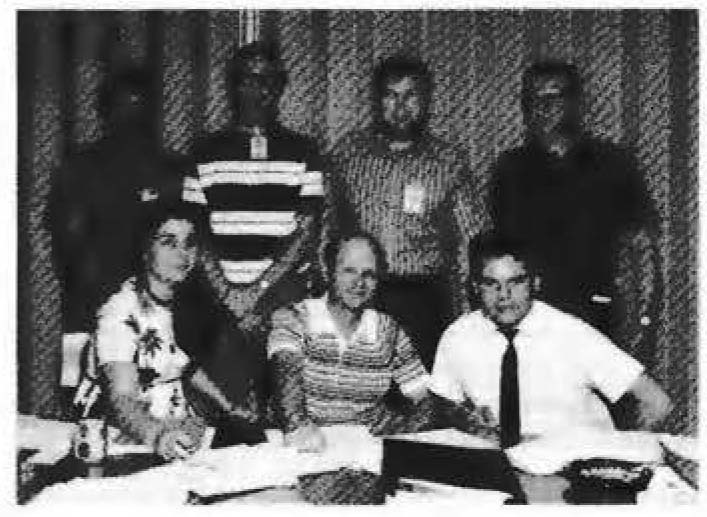
Walt Guy recalled that in July 1972 the Americans still believed that the Soviets had bottled nitrogen aboard Soyuz for leakage makeup. Only much later did they learn that there were no gas stores on board at all. When this became clear, the Americans understood why the Soviets insisted upon a virtually leakproof spacecraft. According to Guy, “They had implored us from the beginning to tighten our leakage [rates],” which were “10 times greater than theirs.” Where the Soviets tolerated virtually zero leakage, it was not unusual for the American spacecraft to lose up to a “tenth of a pound per hour, [and] that is not really very many pounds in a normal mission.” In Apollo, the Americans compensated for this loss by carrying extra oxygen.21
Even though Dolgopolov had not prepared any documentation prior to the joint July sessions, he, Guy, and Jim Jaax drafted four Interacting Equipment Documents that described spacecraft environment. In addition, the Americans gave the Soviets data on space suits and prebreathing units that they expected to use. In large measure, the U.S. desire to understand the Soyuz environmental control system arose from the need to make some immediate decisions about the design of the docking module.
Concurrently with the Soviet-American meetings, the first Preliminary Design Review (PDR) with the engineers from North American Rockwell was held at MSC on the 13th. At the PDR, Guy and Jaax had to make some changes in the docking module ECS schematics to reflect the changes negotiated the night before with Dolgopolov. These modifications were a result of the Soviets’ concern about the safety of some of the valves that led to overboard gas vents. Where the Americans relied upon the basic design of the valves to ensure safety and carried extra gas in case of valve failure, the Soviets wanted a redundant valve in the overboard system as an extra precaution.22
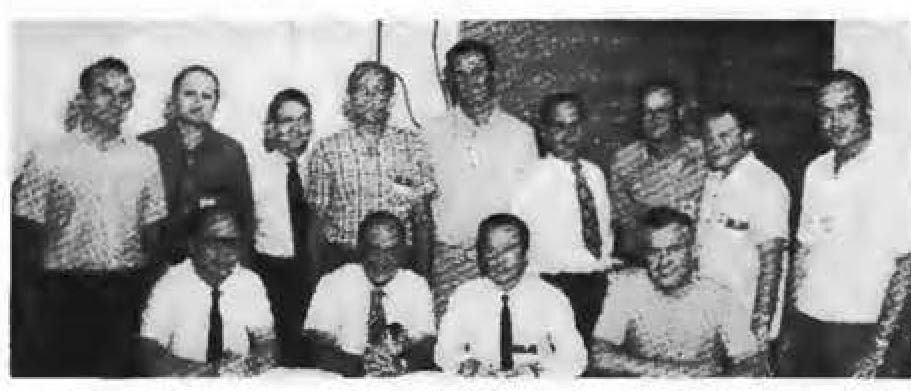
While the life support people were exploring these topics, the combined Group 2 and 4 team were negotiating an agenda full of items that were an extension of their work done during May in Moscow. In addition to completing interacting equipment documentation covering external lights, docking targets, control system use, and associated rendezvous and docking questions, they solved the thorny problem of “exchanging versus building” communications and tracking equipment. NASA agreed to provide the Soviets with the Apollo lunar module VHF transceivers and range tone transfer assemblies. R. H. Dietz told his counterparts that the Americans would manufacture the Soviet frequency VHF/FM radio communications equipment for the command module. Other topics included cable communications and electrical connectors between the two spacecraft and the type of television cameras that would be transferred from one craft to another.23
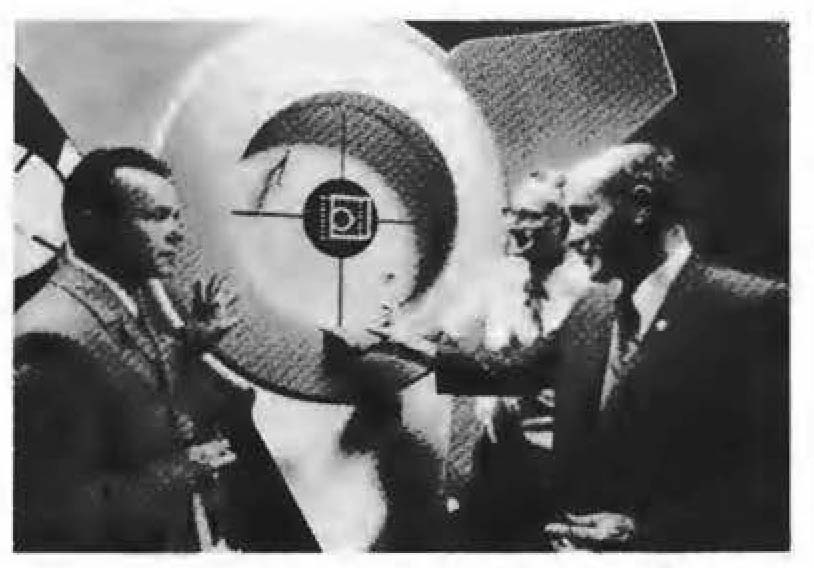
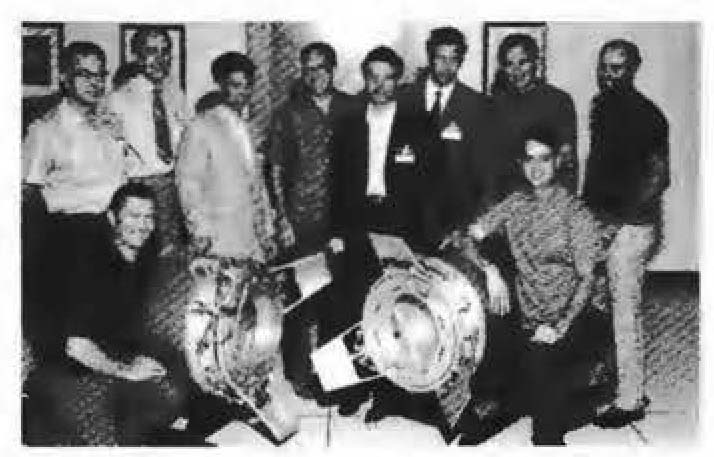
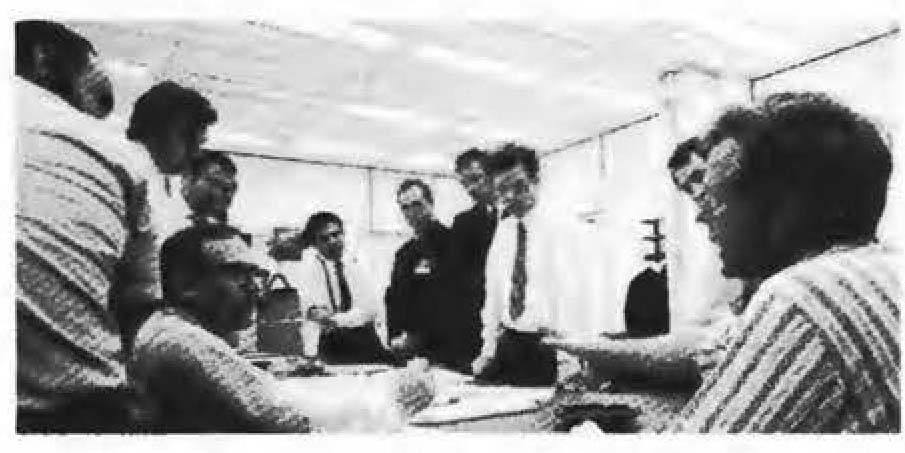
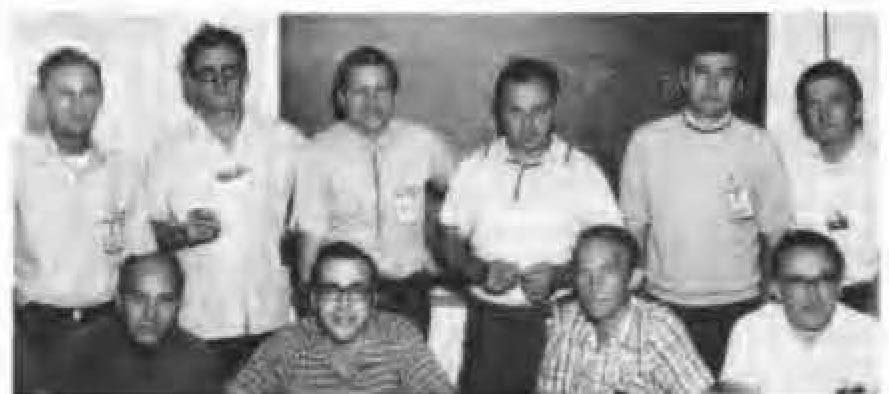
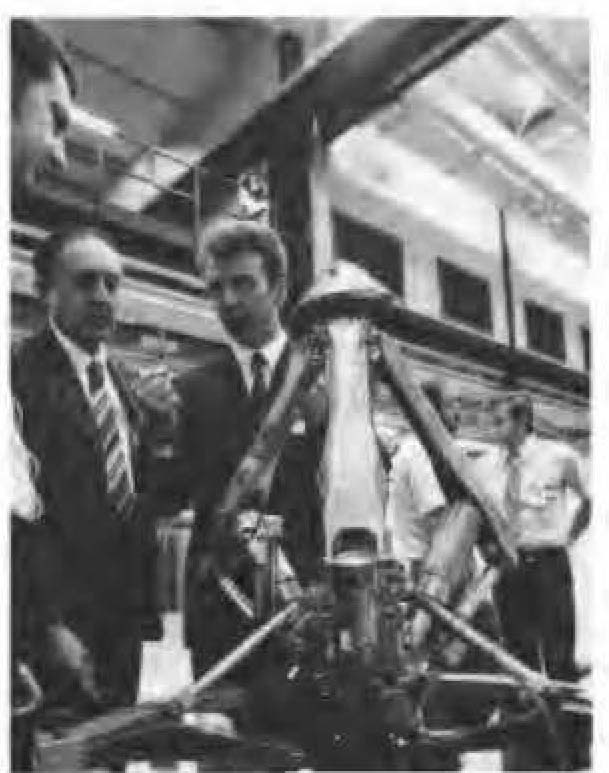
Group 3 concentrated on spelling out more fully specifications for the docking system. Some refinements were made in the guides and other parts of the mechanism; as with the other groups, a schedule for the upcoming months was written, indicating documents to be prepared and tests to be conducted. After the team had a thorough look at the American two-fifths-scale docking system, which helped the designers discuss the operation of the mechanism and decide on refinements, they scheduled joint model tests for December. Then the engineers would be able to see just how the interfacing elements of one country’s system mated with those of the other. The Soviets said they would draft the “Test Plan for Scale Models of Apollo/Soyuz Docking System” (IED 50 003), while the Americans drew up the dimensions of the model and the test fixtures.
The last day of joint activities in Houston, 18 July, was given over to final preparations of the documents.* With the departure of the Soviets, the MSC personnel directed their full attention to preparing for the next sessions, scheduled for October. The afternoon of the 18th and most of the 19th were spent in debriefings.24 Working Group chairmen summarized the events of the preceding two weeks for their colleagues and Director Kraft. Looking at the overall rate of progress, Lunney thought that the Soviets were gearing up more slowly for ASTP than was NASA, but this was due in large part to the difference in building cycles for the two types of spacecraft. NASA was faced with a declining work force at the North American Rockwell factory in California, since CSM 111 and the modification kit for CSM 119 would be the last of Apollo. Lunney reported that we “wanted to get all the work done as soon as we could.” The Soviets, on the other hand, were building their Soyuz on a serial production basis with no signs of diminishing their activity. They could take a more leisurely approach to finalizing design elements. NASA’s expeditious building of hardware was entirely consistent with the agency’s modus operandi, according to Lunney.
In general our approach is a go-go thing. For good reasons-that is not to say that it should be hasty-but generally we’ve found that it doesn’t do you any good to dilly-dally around and leave problems hanging around for a long time. They just multiply, and you end up with more snakes than you can kill in one week, if you don’t start stomping them as soon as they show up. So we just plunged into this thing with our typical gung-ho approach.25
* At this meeting MSC with the support of Boeing began a “History Data File” for each meeting, which preserved all jointly signed documents and materials exchanged, as well as other materials of historical and managerial importance.
During the next 70 days, MSC was kept busy. As engineers and designers spent late hours at their drafting tables, development tests were conducted and more design reviews were held.26 Lunney chaired ASTP staff meetings at 1:00 p.m. every Friday to summarize the week’s activities and assign “action” items for the next week.27 (See box on next page.) As the liaison between MSC and NASA Headquarters, Lunney also kept Apollo Program Director Petrone informed of the progress being made on ASTP. Headquarters in turn kept the White House and the Congress advised.28 This cycle completed, it was time for the next round of talks.
Chronology of Manned Spacecraft Center Activities-July-Oct. 1972
| Date | Location | Meeting/test |
|---|---|---|
| 6-18 July | Houston | Joint U.S./U.S.S.R. meetings. |
| 18-19 July | Houston | MSC management debriefings. |
| 22-28 July | Houston | Thermal vacuum test of ASTP docking gaskets at JSC's Space Environment Effects Laboratory (SEEL). |
| 25-26 July | Houston | Working Group 4 and Apollo Spacecraft Office staff discuss work for October joint meeting. |
| 27-Jul | Houston | Preliminary Design Review (PDR) no. 2. |
| 28-Jul | Houston | ASTP staff meeting. |
| 2 Aug. | Houston | Crew Systems Division meeting with North American Rockwell (NAR) representatives to discuss life support system breadboard test. |
| 2 Aug. | Houston | Meeting to discuss service module reaction control system (RCS) design and external thermal constraints. |
| 4 Aug. | Houston | ASTP staff meeting. |
| 8 Aug. | Houston | Service Module RCS design and thermal criteria meeting |
| 11 Aug. | Houston | ASTP staff meeting. |
| 18 Aug. | Houston | ASTP staff meeting. |
| 21-24 Aug. | Downey (NAR) | PDR no. 3. |
| 24 Aug. | Houston | Telecon with the Soviets. |
| 25 Aug. | Houston | ASTP staff meeting. |
| 28 Aug.-30 Sept. | Houston | Thermal vacuum tests of ASTP docking gaskets at JSC's SEEL facility. |
| 1 Sept. | Houston | ASTP staff meeting |
| 5 Sept. | Houston | October agenda telexed to the U.S.S.R. |
| 6 Sept. | Downey | Walk through review of plywood mockup of docking module; representatives were present from NAR and the Astronaut Office. |
| 9-15 Sept. | Houston | Space Environment Test Division and Engineering and Development Directorate hold meeting on testing to be conducted on docking module. |
| 13 Sept. | Houston | ASTP staff meeting. |
| 13 Sept. | Houston | Telecon between G. S. Lunney and G. Jeffs, NAR, to review activities. |
| 13 Sept. | Houston | "ASTP management review for R. A. Petrone, with representatives present from Headquarters, KSC, and MSFC." |
| 20-21 Sept. | Downey | Design Review of docking system layouts and assembly drawings. |
| 22 Sept. | Houston | ASTP staff meeting. |
| 27 Sept. | Houston | Technical director and Working Group chairmen meeting to discuss work plans for October meeting in Moscow. |
| 28 Sept. | Houston | Telecon with the Soviets. |
| 29 Sept. | Houston | ASTP staff meeting. |
| 5-6 Oct. | Downey | ASTP docking module crew station mockup review. |
| 9-19 Oct. | Moscow | Joint U.S./U.S.S.R. meetings. |
OCTOBER IN MOSCOW
A 27-person NASA delegation arrived in Moscow shortly before 4:00 p.m. on Saturday, 7 October 1972. After a day of sightseeing, the three Working Groups (I, 3, and 5) began 11 days of work on the agenda items drafted during a September exchange by telex and telephone.29 H. E. “Ed” Smith represented Group 2 in some of the negotiations, while George Jeffs, manager of the CSM program at Rockwell, and Clarke Covington acted as advisers to Lunney and the three chairmen. By then a sort of routine had emerged-work the technical problems at home and prepare for the next meetings; attend the joint sessions and define the next phase of activity. The Americans were ready.
Subjects discussed by Working Group 1 this time fell into five categories. First came trajectory considerations: specialists outlined the paths of the two spacecraft from launch through rendezvous and docking. In addition to investigating alternative launch opportunities so that the mission could still be conducted if there was an abort during initial launch attempts, the two sides examined which Apollo revolution—the 14th or the 29th-would be selected for docking.
When the Soviets discovered that they had a ceiling of approximately 225 kilometers due to the weight of Soyuz as configured for ASTP, they asked the Americans to consider lowering the docking orbit to 222 kilometers from 232.30 But they made their request in the guise of a technical problem in orbital flight mechanics. After considerable confusion and much dialogue, Covington asked his Soviet counterpart, “Tell me, is the main reason you want to fly at a lower altitude because you have got a weight problem and your launch vehicle can’t get you any higher than that?” Yes, came the Soviet reply. Looking back, Covington said:
It was no real problem to us, but we just couldn’t understand why they wanted to do it.... It was no big deal for us but it was a big deal for them. They seemed to embarrass easily about the capability of their spacecraft, which they had no need to do. Their spacecraft was designed for a different thing that Apollo was. The Apollo spacecraft is way over designed for this mission, it was built to go to the moon and back. We just had an inherent capability greater than theirs.31
But the Americans were realizing that early Soviet boasts of leadership in space still echoed in the background. When it came to making changes, the Soviets would always prefer a technical rationale to directly admitting limitations or asking for assistance.
But these difficulties did not hinder the work of Group 1. Under the chairmenship of M. P. Frank and V. A. Timchenko, they went on to discuss problems related to finding common formulas to determine the earth’s atmosphere and gravitational field so as to achieve compatible trajectory calculations. They needed to be certain that when they placed their spacecraft in orbit the mathematical computations would permit the Apollo crew to complete rendezvous. Besides the trajectory issues, progress was made on four other topics-mission requirements, contingency plans for abnormal situations, onboard flight and activities plans, and crew training and mission operations.32
Frank observed that the Soviet delegation, which included 15 people, represented systems planning, flight control, flight crew activities, and mission documentation. In the past, NASA had been concerned over some of the Soviet specialists’ lack of expertise, but seemingly the correct personnel were now involved. Pete Frank also indicated that while the two sides approached the organization of flight-related data in completely different ways, they basically agreed on the technical information involved. After discussing crew training with Astronaut Tom Stafford and Cosmonauts A. G. Nikolayev and A. S. Yeliseyev, Working Group I scheduled the initial training session for mid-1973 in Houston, with a second meeting planned for autumn in the U.S.S.R. The Soviets were considering selecting two prime crews and two backup crews to train with the U.S. astronauts. The second set of Soviet crews would be trained as standby in case a second Soyuz must be launched.33
Ed Smith, who had replaced Cheatham as American chairman of Working Group 2, discussed a number of guidance and navigation issues with V. P. Legostayev, V. A. Podelyakin, and I. P. Shmyglevskiy. One of their major decisions related to the proposed development of a “centerline television” system for docking, mounted in the front of the docking module, transmitting to the Apollo crew a television image of a docking target on the Soyuz half of the docking mechanism. This system was being evaluated to determine if it would give the Apollo crew a better docking approach than the externally mounted passive target that had been used throughout the lunar module dockings. But for technical and financial reasons, the Americans wanted to drop the new idea and stay with the external target. The Soviets agreed. Canceling the television system also meant eliminating a glass viewing port in the DM hatch-a desirable change since it simplified the design, removing a minor element, which if damaged, could have posed a threat to the crew.34
Smith and Legostayev proposed to convene meetings of Groups 2 and 4 in Houston at the end of November, even though the Soviets had indicated that it might be difficult to complete all their preparations by that date. They had not anticipated the depth at which the Americans were pursuing these discussions but consented to make every effort to complete their work in time. On the other hand, the Americans in Working Group 3 had been quite pleased with the preparations the Soviets had made for their October session; they had fully understood the expectations and needs of their NASA counterparts.
PRELIMINARY SYSTEMS REVIEW (STAGE I)
Under the direction of V. S. Syromyatnikov, the Soviet Group 3 team had readied their documentation in both English and Russian and had prepared their two-fifths-scale model of the docking system for the joint meeting. Some of the Americans observed that while the U.S.S.R. mechanism was more complex mechanically than the American one, it was suitable for the mission and “sophisticated” in its execution. The two sides reviewed and signed the two-fifths-model test plan and scheduled the test for December in Moscow. Another important Group 3 milestone was the completion of the first part of the docking system Preliminary Systems Review (PSR).35
The PSR was planned to be a “formal configuration review... initiated near the end of the conceptual phase, but prior to the start of detail design” work on the docking mechanism. As part of their presentation to the Preliminary Systems Review Board (the Board being the Technical Directors), Don Wade and Vladimir Syromyatnikov included all the test data, specifications, and drawings for the docking system, as well as a design evaluation for the mechanism. After hearing their report, Lunney and Bushuyev felt three problem areas needed further study. First, the requirement for a spring thruster designed to help separate the two spacecraft had caught their attention, since the failure of this thruster to compress properly could prevent completion of docking. Second, Lunney and Bushuyev emphasized the importance of an indicator that would verify that the structural latches were properly in place. The American system provided information on the functioning of each latch but did not indicate that the interface seals were compressed, while the Soviet system gave data on compression of the seals but none for the latches. To assure the structural integrity of the transfer tunnel, it was important to know that all eight latches were closed.36 The third problem area also dealt with those structural latches. Was it possible that they could be inadvertently released? Bushuyev and Lunney called for a thorough re-evaluation of all these issues and advised Group 3 to present their specific recommendations to them in December and January.377
Don Wade, the American chairman, was not completely happy with the manner in which the PSR had been executed. In his opinion, toward the end of the review session, matters became “pretty fouled up.” Nevertheless, the teams did achieve their goals at the PSR, and Wade believed that the second phase of the review scheduled for December would be accomplished in a more orderly fashion. But the development of international space hardware was not an easy task. The Americans and Soviets were still learning to work together, and while Lunney had commented that working with the Russian specialists was quite similar to working with a new contractor there was one significant difference. In the Apollo-Soyuz Test Project, the two teams were equal partners. Neither side could tell the other how to do its work. Instead, engineering agreements had to be negotiated, undoubtedly a new experience for both countries. Two men were particularly aware of this difference; Lunney and Bushuyev kept their teams in line as the process of learning to work together continued.38
COMPATIBLE ATMOSPHERES
Ed Smylie and his NASA colleagues working on environmental control problems with the Soviets were quite satisfied with their progress. Ilya Vladimirovich Lavrov was present at the Moscow sessions, and it was apparent to the Americans that he had sparked considerable activity on his team’s part since the July meeting. With few preliminaries, the October talks tackled the question of spacecraft pressures. The Apollo command module would continue to operate at its standard pressure, 258 mm Hg. But at the Soviets’ suggestion, the pressure of the Soyuz would be lowered during the docked portion of the flight to eliminate lengthy pre-breathing periods. While the “most rational decision to make would have been to utilize the same atmosphere with regard to total pressure and partial pressures of oxygen,” the Apollo could not have an operational pressure higher than 325 millimeters, and the Soyuz for reasons of fire safety could not have an oxygen content higher than 40 percent. In addition to greatly simplifying the onboard hardware and equipment with which the crews would work, this important Soviet design concession also meant that the transfers between the two ships would be easier, reducing time and procedures.39
Group 5 also discussed the Soyuz life support system and modifications that would be required to lower pressure during the joint phase of the mission. Lavrov indicated that the Soviets had put aside all considerations of using a pressurized oxygen system and instead would modify the existing potassium superoxide oxygen generating system. In addition, they said that they would develop an emergency pressurization system as NASA had suggested. At this meeting, the Americans finally understood that this capability had not been present on earlier Soyuz flights and that in fact the Soviets had never carried any pressurized gases on their spacecraft.40
The specialists also discussed such contingency situations as extravehicular transfer and the return of mixed crews. After reviewing the life support systems of both spacecraft, they came to the conclusion that there was no real need to consider external transfer on this mission, thus eliminating the need for special equipment related to space suits. Return of a crewmember from one nation in the spacecraft of the other was considered a possibility in an emergency situation, but it would have to be accomplished without the use of any supplementary equipment. The Soviets requested more time to study this contingency and agreed to report back in March 1973. Lavrov also indicated that they had definite plans for vacuum chamber tests (similar to the American tests of an early breadboard mockup of the DM) of an orbital module/docking module combination. The Americans said they would provide the Soviet team with drawings so they could build a DM boilerplate model for these tests.41
The meeting in Moscow had gone well. From his vantage point on 25 October, Lunney said at a combined debriefing session and ASTP staff meeting in Houston that he had been pleased with their progress. He noted that the Soviets had been well prepared, providing adequate translators, interpreters, and general logistical support for the gathering. Reporting on future activities, he said that Groups 2 and 4 would meet in November, Group 3 would hold tests in December, and the next plenary sessions were scheduled for March 1973 in Houston.42
After getting back to Texas, Lunney and his ASTP team prepared for two major reviews of hardware design with North American Rockwell. On 8 November, the Critical Design Review (CDR) for CSM 111 and the Preliminary Design Review for the docking module and docking system were convened at the contractor’s Downey factory. Basically, the CDR was held to conduct a detailed check on the CSM engineering specifications and drawings prior to their release to the production engineers who would then oversee the manufacturing and assembly. The PDR for the docking module and the docking system was another in the series of basic checks on the detailed design tasks related to those pieces of flight hardware. For these reviews, there were 24 teams, each of which was co-captained by a NASA and a contractor employee. Following two days of study, Lunney sat as chairman of a Design Review Board, which met at 8:30 a.m. on the 10th.* 43 While these reviews were in process, Rocco Petrone briefed the Office of Manned Space Flight (OMSF) Management Council on the major accomplishments of the October trip to Moscow and Ed Smith and R. H. Dietz. prepared their Working Groups for the sessions slated to begin on 24 November.44
* The members of the board were as follows: from MSC, G. S. Lunney, T. P. Stafford, D. R. Scott, R. A. Colonna, F. Miller, R. P. Burt, E. W. Sievers, and A. Dennett; and from Rockwell, G. Merrick, E. P. Smith, and C. Helms.
THANKSGIVING IN HOUSTON
As originally planned, the Soviet delegation would arrive in Houston on 22 November so they could join in an American Thanksgiving dinner before starting to work on Friday, the 24th. Because of a 19-hour mechanical delay in Moscow, however, the visitors did not arrive at Houston Intercontinental Airport until 3:00 Thanksgiving afternoon. Ed Smith and his Group colleagues listened to the Oklahoma-Nebraska football game on a portable radio while they waited. When the party did finally deplane, they were all rather wilted and exhausted. Ed Smith rode to the Kings Inn in Clear Lake City with the Group 2 specialists, and R. H. Dietz and A. Don Travis accompanied Group 4. All plans for a festive meal were canceled, and the Soviets were given the remainder of the day to recover from their trip. Looking back on that occasion, Don Travis recalled that he ate a “hell of a lot of turkey” over the next few days.45
Work began at 9:00 a.m. on the 24th. Viktor Pavlovich Legostayev was in charge of the nine-man Soviet delegation, and he told Smith, Working Group 2 chairman, and Dietz, Working Group 4 chairman, that he would initially give the majority of his time to communications issues because Group 4 had the greatest number of agenda items to be completed in the time alloted for their stay. Once the communications and tracking discussions were satisfactorily under way, Legostayev turned the Soviet part of the talks over to Boris Viktorovich Nikitin and assisted Group 2.
Ed Smith found his three Group 2 counterparts to be first-rate engineers and good people with whom to work. Smith, who had the personal sense of precision and perfection that guidance and navigation demanded, was full of praise for Legostayev:
As had been the case in the past, his knowledge of the analytical problems associated with guidance and control is excellent. His knowledge of English is good and improving. He discusses technical problems in English easily, and only in the case of large meetings does he use Russian. He is at ease and very congenial in either large or small groups and appears to be an excellent leader and organizer. He is competent in problems of hardware integration but appears to prefer analytical work.46
From their discussions, Smith got the feeling that Legostayev was the designer of the Soyuz automatic rendezvous and docking control system and that he might have been the chief designer for all the attitude control systems used on that spacecraft. The Americans found Legostayev willing to listen to both sides of an issue before he made his own position known. Like most of his Soviet colleagues, he did not have the authority to make decisions on the spot during a meeting, but his recommendations appeared to carry considerable weight with his superiors.47
In his post-meeting report to Lunney, Smith indicated that he had been equally impressed with Shmyglevskiy and Podelyakin, who, in addition to being experts in their respective fields of guidance and control and docking targets, also had a good command of English. Nearly 95 percent of Group 2’s negotiations were conducted in English, a factor that speeded their work considerably. Elsewhere, the language barrier was more of a problem, and many American engineers began to learn Russian. Despite their studies, difficulties with preparing joint documents would continue to be a primary concern.
During their November meeting, Group 2 looked at three basic topics-control systems, rendezvous analysis and tracking requirements, and docking targets. Smith and his NASA colleagues exchanged functional descriptions of the Apollo and Soyuz control laws used in the flight systems with Legostayev and Shmyglevskiy. Group 3 had asked for this information so that they could complete the computer program for simulating the docking of the two spacecraft. During their discussion of control systems, Group 2 outlined and agreed on the procedure that would be used for controlling the ships when they were docked. This meeting gave the chairmen a better understanding of the conditions that flight crews could anticipate prior to docking and the manner in which the two ships would act after they were joined together as one orbiting mass.48
American specialists brought their latest revision of rendezvous trajectory and tracking requirements. A normal flight path dictated the need to begin VHF radio tracking at 236 kilometers, but the Americans wanted to extend the tracking range to 266 kilometers to account for trajectory dispersions that might occur if the launch of either spacecraft was delayed to one of the alternate opportunities. For optical tracking, the Soviets and Americans planned to exchange samples of their different exterior coatings so that the reflectivity of the ships’ surfaces could be determined. Optical tracking with the Apollo sextant appeared to pose no problems for the normal trajectory, but some of the flight paths dictated by alternate launch times might cause some difficulties if the Soyuz were lost in the brilliance of the sunlit earth. These issues were placed on the agenda for further study.
Podelyakin described for the Americans the docking target installation that they were planning to build for Soyuz. MSC personnel in turn presented the North American Rockwell proposal for ensuring proper alignment of the docking target and the Apollo alignment sight. They also considered various methods for aligning the two craft if the Soyuz target failed to deploy properly. This subject was also placed on the agenda for March, when the group would hold a Preliminary Systems Review of the docking alignment system.49
Simultaneously with the Group 2 effort, the members of the Working Group 4 communications team worked literally days, nights, Saturdays, and one Sunday to complete all the items on their list. Part of the difficulty in negotiating arose from the Soviets’ fixed 3 December departure date. Dietz said in a report that the selection of an arbitrary date for completing the work without taking into account the anticipated workload placed an unnecessary strain on the support people (translators, typists, and drivers), as well as on the delegation itself. Glynn Lunney subsequently wrote to Professor Bushuyev, stressing the need for adequate time. In addition to setting aside one or two days at the end of a meeting for cleaning up the documents and signing them, Lunney suggested that documents scheduled to be signed should be made available in draft form at least one month before the session. If documents were understood beforehand, the meeting time could be put to better use. Documents introduced for the first should be presented in both languages to prevent a similar waste of time.50
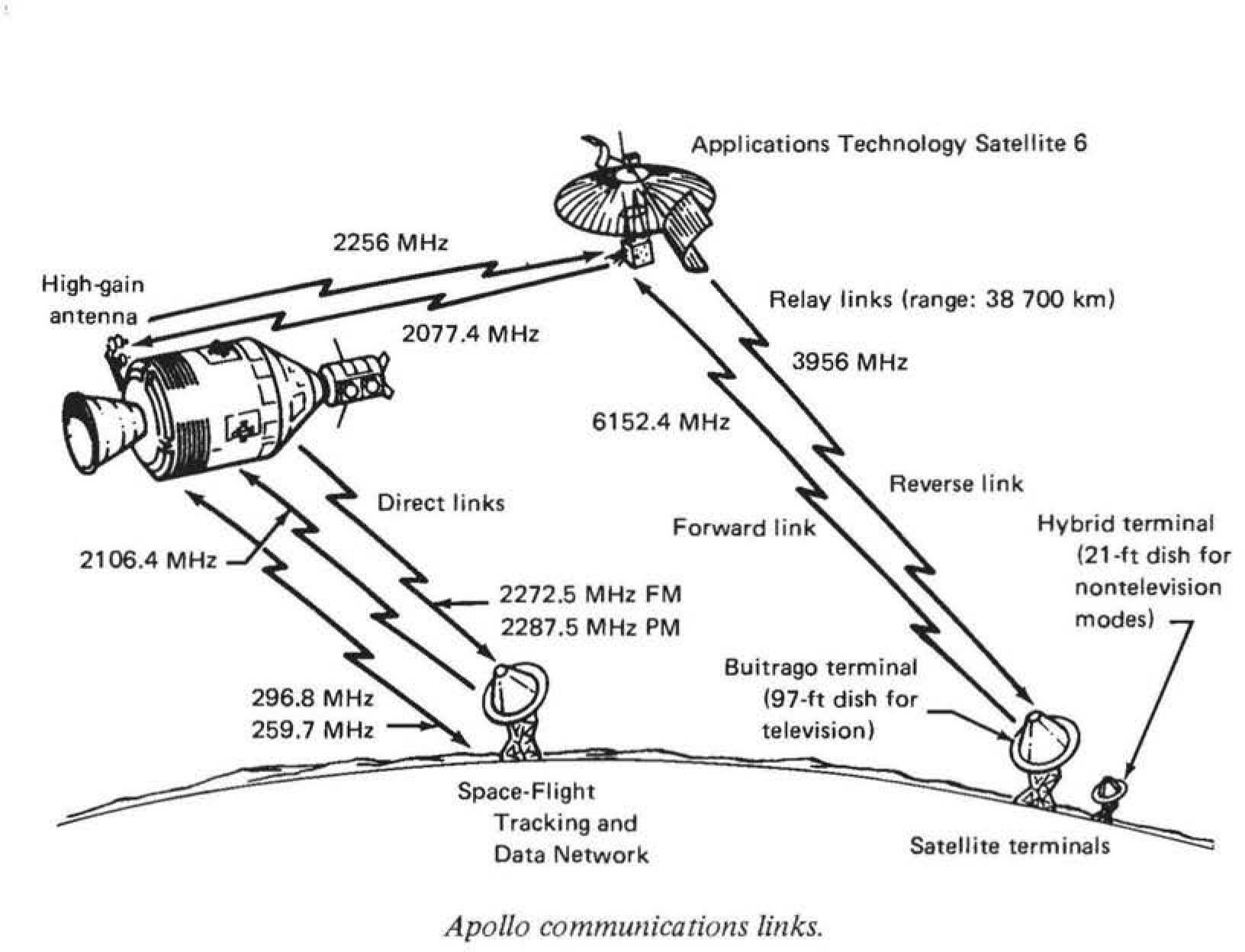
Despite the tight schedule, Group 4 accomplished all its major goals. After reviewing the Soviet antenna data, the Americans concurred with their counterparts’ wish to build the Soyuz antennas for both the 121.75-meg-ahertz (VHF/FM) and the 296.8-megahertz (VHF/AM) systems. Agreements were also reached concerning signal characteristics for the radio communications and ranging systems, compatibility test plans for those systems, and installation of the Apollo VHF/AM equipment aboard Soyuz. The specialists also completed a definition of the cable communications system that would be used between the two craft, and they finished preliminary talks about the communications links that were necessary between Houston and Moscow mission control centers. From the American vantage point, the Group 4 activities were extremely productive. The depth of system definition was sufficient to permit the detailed design of the communication gear. Lunney, in his post-meeting letter to Bushuyev, said that he was very pleased with the progress made and asked the Professor to thank the Soviet specialists for their hard work and dedication.51
PRELIMINARY SYSTEMS REVIEW (STAGE 2)
Working Group 3 tests of the two-fifths-scale model and the second part of the Preliminary Systems Review for the docking system was the last joint activity scheduled for 1972. The Americans arrived in Moscow on the 6th of December and worked through the 15th. MSC specialists were becoming seasoned travelers. During the October meeting in Moscow, most of the Americans had been infected by an intestinal parasite, which severely debilitated some of them after their return home. As a consequence, the team that went to the U.S.S.R. in December took along some pans in which they could boil their drinking water, hot plates, and some American style food-crackers, peanut butter, and canned dinners-to which their stomachs were more accustomed. With these supplementary rations and other items obtained from the American Embassy commissary, Don Wade reported that his team returned in much better health. Group 3’s work went better than it had in October, too.52
Wade said that the Soviets were well prepared for the meeting. They had a team ready to begin the tests of the two-fifth’s-scale docking systems. And following Lunney’s suggestion, the Soviets provided the Americans with English and Russian versions of the materials they planned to disucss. There were some minor problems along the way, but all in all the trip was very successful. The PSR went especially smoothly, with the changes in the engineering drawings being studied and accepted by Syromyatnikov and Wade, who in turn recommended their acceptance by the Technical Directors at their March 1973 meeting.53
Testing the scale models at the Institute of Space Research in Moscow went equally well. In his report to Chris Kraft, Lunney pointed out that these tests had indicated compatibility of the two systems in both the active and passive modes and that Working Group 3 had anticipated the minor problems experienced during the exercise and had already accounted for them in the revised drawings. Summarizing, Lunney said:
The meeting is considered to be a very successful one and, while we haven’t placed a great deal of importance on the results of the model tests, I believe the accomplishment of this first major hardware related milestone on schedule is in itself significant. We have identified no major problems and are proceeding on schedule.54
Critics and supporters alike were surprised at the basically cooperative attitude of the Soviets and the progress being made toward the joint flight. There had been some frustrating moments for Glynn Lunney and his associates, and there would be times of tension and disagreement in the future, but how things had changed since the days of October 1957 or April 1961. Given the background of competition that had produced Sputnik, Gagarin’s orbital mission, and the American resolve to beat the Soviets to the moon, the cooperative aspects of ASTP boggled some minds. One pair of critical writers found it all hard to believe:
Subsequent meetings were reported as going equally well. This applied both to specific “Working Groups,” which met with increasing frequency either in the USSR or the US, and to large “plenary” meetings of full delegations from both sides concerned with the project. Within the compass of the ASTP project itself, these meetings were marked by exchanges of technical data and information, as well as a degree of personal contacts among the specialists involved almost without precedent in US-Soviet relations including those of the war-time alliance.55
The Soviets and Americans accomplished many things, but they still faced a multitude of tasks.
YEARS OF INTENSE ACTIVITY
At the end of 1972, 26 months since NASA’s first visit to Moscow to discuss cooperation and six months since the Summit officially created ASTP, Lunney could reflect upon the project’s accomplishments with a positive frame of mind. A mission had been defined. Hardware design and development were well along. And Working Group activities during the thirty months that remained until launch would follow a pattern established during 1970-1972 and the schedule negotiated by Bushuyev and Lunney. More than anyone else, Lunney was responsible for maintaining the pace of the joint effort. From his office on the seventh floor of the Program Management Building at MSC, he had to exercise considerable diplomatic and managerial skill to keep his NASA, contractor, and Soviet teammates moving along to the July 1975 deadline. After the Apollo 17 flight, Lunney was given a more direct line of authority for reaching that goal.
The sixth and final lunar landing, successfully completed by the Apollo crew on 19 December 1972, closed out another chapter in NASA manned space flight operations. With the return of 17’s Eugene A. Cernan, Ronald E. Evans, and Harrison H. Schmitt, OMSF reorganized in preparation for Skylab and ASTP. Dale Myers announced in January 1973 that Rocco Petrone would be leaving the Apollo Program Office to become the Director of the Marshall Space Flight Center. Petrone was replaced by Chester M. Lee, who moved up from Apollo Mission Director. At Houston, Lunney succeeded Owen Morris as Manager of the Apollo Spacecraft Program Office, which in addition to ASTP had the responsibility for managing the command and service module aspects of Skylab, scheduled to be visited for the first time on 25 May 1973. Chet Lee and Glynn Lunney now directed the team that would carry the Apollo half of ASTP to completion.56
Lee and Lunney worked well together. While Lunney was concerned mainly with the technical aspects of ASTP, Lee had to worry about technical, political, economic, and public relations considerations. A 1941 Naval Academy graduate with 24 years of service, Lee spent the latter part of his naval career working on the Polaris ballistic missile weapon system. Captain Lee, as he was called by this NASA colleagues, joined the space agency in 1965 as Chief of Plans in OMSF’s Mission Operations Directorate. Lee and Lunney shared more than the same managerial problems-both men liked good cigars and had a reliable sense of humor. But the two men shared another more important trait-an honest, straightforward manner of dealing with other people. This characteristic was a very valuable one for NASA when Captain Lee talked to members of the press and Congress.
On 2 October 1973, Chet Lee gave a typically candid briefing to members of the Manned Space Flight Subcommittee of the House of Representatives Committee on Science and Astronautics. George Low, Gene Cernan, and Lee had traveled to Capitol Hill that morning to provide the congressmen in closed session with detailed background on ASTP and to relieve one particularly nagging concern. Chairman Olin Teague Representative Don Fuqua had corresponded with NASA about the scientific experiments planned for ASTP. As Fuqua stated their worry, “Our concern has been in the event of any reason it were not possible to conduct a joint mission with the Soviets NASA should be prepared to justify the mission on its merits.”57 Clearly, confidence in the Soviets’ ability-politically and technically-to perform the joint mission was not universal. The Manned Space Flight Subcommittee wanted some assurance that the scientific program planned for the Apollo part of the flight would help justify the $250 million total cost.
The timing of Chet Lee’s presentation was significant. On the day before, NASA had celebrated its 15th anniversary, and Lunney had arrived in Moscow with a 47-member delegation for a meeting that would culminate in a Mid-Term Review of ASTP; and on the day of the briefing, tests of the full-scale Soviet and American docking systems began in Houston. Lee and Cernan were scheduled to leave for Moscow on 3 October, and Low would follow them in about ten days’ time. Although the congressmen were primarily interested in the experiments program, Lee gave them a complete status review so they would have a better context within which to judge ASTP and the scientific experiments.
He began with a report on the new hardware designed for the mission. The joint design work on the docking system was complete, as was the design effort on the docking module. Modifications to the CSM, which Lee pointed out was left over from the Apollo program, had been made with the exception of those that would be required by the experiments hardware and the modified high gain antenna needed for communicating with the Applications Technology Satellite (ATS) for improved television, radio, and scientific telemetry transmissions to the ground. Lee indicated that ATS-F was very important to the success of the scientific experiments. Apollo had been able to broadcast picture, voice, and data from the moon on an almost uninterrupted basis. Skylab was able to communicate from its 438.2-kilometer orbit for an average of 28 minutes per 93-minute revolution. But ASTP at an altitude of 225 kilometers would have ground station coverage for only about 15 minutes per 88-minute revolution. This limited ability to transmit to receiving stations would severely hamper the amount of data that could be gained from some of the experiments. With ATS-F, which was scheduled for launch in 1974 (at which time it would be called ATS-6), the communications coverage would be extended to about 49 minutes per orbit.
Reporting on the status of other hardware elements, Lee told the congressmen that the first of five docking systems had been completed by Rockwell International* for use in the development tests. While the joint dynamic tests were scheduled for mid-November, the first round of docking seal tests had been completed and the results reviewed in Moscow at the end of June. Though some minor design changes were being made as a result, confidence in the seal used in the docking system had increased considerably. Fabrication of the docking module was also on schedule. He pointed out that this was largely because of the decision to build the life support system and electrical control equipment into a panel that could be constructed separately and then installed into the spacecraft. Lee could give a very favorable hardware status report.
* North American Rockwell Corporation had been renamed in Feb. 1973.
Lee was equally optimistic when he talked about operational planning. The “Joint Crew Activities Plan,” which presented the details of the crew actions during the flight, had reached the point where for a first launch opportunity it could be used that very day. The experiments would have to be worked into it, but basically the activities plan was ready to go, Lee said An early completion date for the Crew Activities Plan had been set because “we recognized that with the language difficulties and numerous joint activities planned we needed an early start. ...”58
Representative Bill Gunter questioned Lee’s optimism. Lee responded by saying, “we are on schedule and ... we are satisfied with [our] progress, but we do have some qualms.” When asked how one could be on schedule and still be experiencing delays, George Low explained:
The hardware is on schedule. The paper work is flowing a little more slowly than we like to see. This has not yet hurt us; the project [director’s] concern is that as we get closer to the launch, there won’t be this kind of luxury of time. We have to work things out now. The paper, too, will flow faster.59
The Soviets had been slow in providing some essential documents the two sides had agreed to prepare and exchange. They had never refused to provide information; they were just slow. For example, at Moscow in June at the very last minute, the Soviets presented a Working Group 4 report that was to have been delivered 13 months earlier, expecting the Americans to sign it.* They would not.60 To Low, Lee, and Lunney, it appeared to be partly a problem generated by Professor Bushuyev’s lack of freedom to make decisions on the spot. Whether in Moscow or Houston, the Professor had to refer to his superiors before he could provide many kinds of information. Lee had reported to Fletcher and Low:
Professor Bushuyev frankly admits that because of the Soviet internal system he does have a problem in meeting commitments on documentation and providing replies to specific questions and requests for amplifying informa-tion, but that he does not have this problem to the same degree with hardware.61
At other times, the Soviets just did not provide in their documents the detail necessary to satisfy NASA. When the specialists from Houston explained why they needed specific points of information, the Soviets provided the additional data, but seldom did they give all the information the first time. Many Americans were frustrated by this tooth-pulling contest.
* The results of this meeting are summarized in appendix D.
The Soyuz 11 was a good example of this problem. To get a better understanding of the failure that led to the tragedy, Glynn Lunney had asked Bushuyev about the technical details of the accident several times, and still he had not received a clear explanation. He had pressed the point in Houston during the March 1973 talks, and Dave Scott had raised the issue again for Lunney at the June meetings in Moscow,62 When Lee and Lunney raised the topic a third time in Houston during July, the Professor told them that he had already explained in March the nature of the failure and the corrective actions taken to assure that it would not be repeated. Lunney firmly explained to Bushuyev that more details were required to satisfy safety and reliability requirements for the joint mission and to assure both supporters and critics of ASTP that the American crew would not be in danger when Apollo docked with Soyuz.
Chet Lee had reported that “from his information it was difficult to reconstruct the failure and [the Soviet explanation] provided little on the corrective action.” Therefore, Lunney requested a fuller and more comprehensible explanation. Bushuyev was very hesitant to promise this, and according to Lee he “appeared to stall by stating the Soviets should then get copies of the Apollo failure reports.” After Lunney and Lee showed Bushuyev a copy of a message from Keldysh acknowledging receipt of the Apollo 13 accident report, the Professor promised to work on this request. Significantly, he would not agree to put this matter into the formal minutes of the meeting, but he did assent to its being included in a letter Lunney planned to write to him.63
Captain Lee, with Lunney’s support, had recommended to the Administrator that a Mid-Term Review might be useful for working out some of these problems:
Glynn Lunney and I have discussed this at some length. We agree that perhaps a meeting between Mr. Myers and Academician Petrov or Dr. Low and Academician Keldysh under the category of a “Review of the Status and Report on ASTP” might be most helpful in avoiding future problems and delays in the Working Groups’ progress, particularly as we move into the more specific plans for the mission.64
Lee was convinced of the genuine desire on the Soviets’ part to make the mission a success. He was also impressed by the rapport that had developed between the Americans and their Soviet colleagues and “in particular, the frankness, confidence and personal working relationships between” Lunney and Bushuyev. Still, he believed that NASA should continue to carefully, but frankly, pursue answers, information and agreements on issues that may be touchy but are related to the mission. In this manner, we will not only provide greater confidence of ASTP success, but we can also gradually eliminate some of the time consuming barriers to smooth and expeditious working relationships with the Soviets in space cooperative efforts.65
In his testimony before the Manned Space Flight Subcommittee, Low said that NASA’s desire to build a solid basis for present and future cooperation was “one of the reasons for my going over there in two weeks for this Mid Term Review.” He also stressed to his audience on 2 October that while Lee and Lunney were probably getting less cooperation than they would have liked, “from the management point of view we are getting far more than we expected to.” Despite the delays, the Soviets had met every obligation they had agreed to in April 1972.66 Still, the concern over the Soviets’ possibly defaulting or failing to fly was the reason Low, Lee, and Cernan were giving their briefing to Representative Teague and his associates. Chet Lee turned to a discussion of the proposed package of ASTP experiments.
Lee’s presentation and the committee members’ comments that followed it dealt less with the actual experiments themselves than with the merits of spending $250 million to fly $10 million worth of experiments in the event of the Soviets’ failure to rendezvous with Apollo. Once Lee had stated that there had been 146 responses to the request for experiment proposals and that a large number of excellent candidate topics had been selected for further evaluation, the conversation turned to possible means of adding to Apollo’s scientific payload. Captain Lee saw three possible ways of increasing the scientific examinations of a unilateral mission-load the backup docking module with additional experiments, create a scientific instrument module bay in the prime CSM, or revisit Skylab, which would have been in unmanned orbit for nearly a year and a half. In addition to the unfavorable impact on the launch timetable, all of these alternative plans would have been expensive and probably caused the project to run over its $250 million budget. Each alternative would involve extra engineering and careful balancing of payload weight and launch vehicle capacity.
George Low looked at the entire project from a political perspective. NASA had sought authorization to conduct a rendezvous and docking mission with a Soviet spacecraft for the purpose of developing a common system for working together in space. At the same time, NASA had pointed out that whatever flies in space should get maximum return for the investment. That is why the agency set aside $10 million for scientific studies. Low continued:
We have discussed it with the Congress since then on the basis that... for any less we could not do a decent experiment package.... That is how the $10 million were arrived at. You asked the question, what would we do if the Russians for some reason would not fly with us, political, technical or otherwise, and would the mission in itself with the $10 million worth of experiments... be worth flying without that rendezvous. I think that answer would depend very much as to when this would happen. Were it to happen now when we have spent a substantial sum of money, which is still a small fraction of the $250 million, we might well decide and discuss with the committee the possibility of cancelling it altogether. Because I am not sure whether it is worth remaining funds to be expended to go up there in 1975 for the $10 million worth of experiments alone without the rendezvous and docking.67
On the other hand, if the spacecraft were on the launch pad and ready to go and for some reason the Soviet portion of the mission were canceled, then NASA would likely want to go ahead with the flight but only after consulting with and obtaining the approval of the Congress and the executive branch.
Representative Teague wanted to know if the American public should be advised ahead of time that NASA had alternative plans for the mission. Representative John W. Wydler saw some dangers in such a course of action. “What would our national reaction be ... if the Soviet Union were to announce their alternative plans for the project if it doesn’t come off?” He thought the American public would assume that the Soviets did not expect the U.S. to fly. “I think that would be something that could be very easily misunderstood from the point of view of the other side if you started to plan what you are going to do if this mission doesn’t happen.”68 In George Low’s position, the most logical course to follow was to develop contingency plans but to assume that the Soviets did indeed plan to fly in 1975. None of the alternatives seemed as desirable as the basic idea of a joint mission. Essentially, NASA had faith that the Soviets would meet their commitment. It was a gamble, but the risk seemed to be a reasonable one.
- Dale D. Myers to John P. Donnelly, memo, "Designation for Joint US/USSR Mission," 5 June 1972; and Donnelly to Myers, memo, "Project Designation," 30 June 1972. X
- Myers to Kurt H. Debus, Eberhard F. M. Rees, and Christopher C. Kraft, memo, "Apollo Soyuz Test Project," 13 June 1972; Philip E. Culbertson to Rocco A. Petrone, memo, "Transfer of Apollo Soyuz Project Responsibility," 9 June 1972; and MSC Announcement 72-31, "Key Personnel Assignment," 2 Mar. 1972.X
- Interview, Leonard S. Nicholson-Edward C. Ezell, 16 July 1974. Nicholson had discussed the issue of two-versus-one managers with Berglund prior to the latter's discussion with Kraft.X
- NASA News Release, MSC, 68-28, 3 Apr. 1968; Glynn S. Lunney, "Discussion of Several Problem Areas during the Apollo 12 Operation," paper presented to AIAA 7th Annual Meeting and Technical Display, Houston, Tex., 19-22 Oct. 1970 (A70-1260); and U.S. Congress, Senate, Committee on Aeronautical and Space Sciences, Apollo 13 Mission; Hearings, 24 Apr. 1970, 91st Cong., 2d sess. (Washington, 1970).X
- [NASA, MSC], "Proposed Operating Plan for US/USSR Meeting on the Apollo/Soyuz Test Project," July 1972.X
- Caldwell C. Johnson, "Working Group Meetings Nominal Procedures," 26 June 1972; Johnson, "Principal Events, July 5 thru July _," 26 June 1972; Johnson, "Working Group Procedures," 26 June 1972; Johnson, "Status Review," 28 June 1972; "Proposed Agenda for Joint Meeting of U.S./U.S.S.R. Working Groups for Compatible Means of Rendezvous and Docking" [n.d.]: "Outline of Discussion with Dr. Kraft (6/14/72) on Preparations for July Meeting with the USSR" [n.d.]; Glynn S. Lunney to Eziaslav Harrin, Tamara Holmes, Dmitri Arensburger, and Dmitry Zarechnak, memo, "Interpreters Assignments and Instruction," 5 July 1972; John W. King to Lunney, memo, "Apollo-Soyuz Test Project Meeting," 20 June 1972; and Lunney to distribution, memo, "Briefing on Apollo/Soyuz Test," 6 June 1972.X
- Lunney to distribution, memo, "Briefing on Apollo/Soyuz Test," 6 June 1972, with attached list of invitees.X
- Ibid.X
- Lunney and Bushuvey had their usual correspondence exchange before the July meeting: Konstantin Davydovich Bushuyev to Lunney, 7 June 1972; TWX, Lunney to Bushuyev, 15 June 1972; and TWX, Bushuyer to Lunney, 22 June 1972.X
- NASA decided to rely upon North American Rockwell to modify the CSM and build the related equipment needed for ASTP. The initial IRDM study had been conducted under a contract change authorization to the original contract, issued 21 Dec. 1961. The work contemplated for the AST mission required a new contract, and drafting of a new Statement of Work (SOW) had started in early 1972. A preliminary version of that document, "Statement of Work for CSM/Advanced Mission Docking System," 28 Mar. 1972, was distributed throughout OMSF. See Culbertson to distribution, memo, "Preliminary Statement of Work for CSM/Advanced Missions Docking System," 12 Apr. 1972. ASPO had established an evaluation team to work with the proposed contractor in evaluating the contract proposal: see James A. McDivitt to distribution, memo, "Designation of Evaluation Team for ASTM (Apollo/Salyut Test Mission) Contract Proposal," 11 Apr. 1972. Meanwhile, Terrence Heil had prepared a procurement plan, "Development of Command and Service Module/ Advanced Missions Docking Svstems (CSM/AMDS)," on 2 Mar., which among other things contained a justification for a noncompetitive procurement. Culbertson described the reasons for selecting NAR in interview, Culbertson-Ezell, 5 May 1975. This procurement plan was approved by Kraft on 29 Mar. and forwarded to Headquarters. Following the May summit, the SOW was changed where necessary to reflect the shift from Salyut to Soyuz, and a letter contract was issued on 30 June. See letter contract, Heil to North American Rockwell Corp., Space Division, Contract NAS9-13100, 30 June 1972. This contract was accepted by NAR on 6 July and scheduled to run for 90 days; a definitive contract was to be negotiated by 29 Sept. Because there was a short delay and that definitive contract was not issued until 6 Oct., Kraft sought a 30-day extension on 22 Sept. See TWX, Kraft to Dale D. Myers, 22 Sept. 1972; and TWX, Myers to Kraft, 28 Sept. 1972. The definitive contract, issued on 6 Oct., was also numbered NAS9-13100.X
- [M. P. "Pete" Frank], "Working Group #1, Notes on Joint Meeting, July, 1972" [n.d.].X
- Reinhold H. Dietz to McDivitt, memo, "ASTP Working Group No. 4 Debriefing Notes, Joint Meetings, July 6-17, 1972," 28 July 1972, enclosing "Joint U.S.A./U.S.S.R. Meeting, July 6-17, 1972, Debriefing Notes, Working Group No. 4" [n.d.].X
- Interview, Lunney-Ezell, 23 July 1974.X
- Interview, Clarke Covington-Ezell, 3 Apr. 1975.X
- Ibid.; and NASA press conference, MSC, "US-USSR Apollo-Soyuz Test Project, Press Conference," 17 July 1972.X
- "Summary of Results." in "Apollo/ Soyuz Test Project, Minutes, Fourth Joint Meeting, USSR Academy of Sciences and US National Aeronautics and Space Administration," 6-18 July 1972.X
- NASA Press Conference, MSC, "US-USSR Apollo-Soyuz Test Project, Press Conference," 17 July 1972.X
- "Minutes of Working Groups 1 and 5," 6-17 July 1972, in "Minutes of Joint Meeting."X
- Interview, Walter W. Guy and James R. Jaax-Ezell, 7 July 1974.X
- The document in question was "Description of the System Providing Gas Composition and Temperature Control of the Habitable Modules of a Soyuz-Type Spacecraft," 1972.X
- Ibid.; and memo, Robert E. Smylie to Lunney, "Summary of Working Group 5 Meetings in July," 31 July 1972, enclosing "Summary of US/USSR Meeting on ASTP," 7-16 July 1972.X
- Interview, Guy and Jaax-Ezell, 7 July 1974; interview, Guy-Ezell, 19 Aug. 1975; "Minutes of the Apollo Soyuz Test Project PDR No. 1 Board Meeting, July 13, 1972" [14 July 1972]; and [North American Rockwell Corp., Space Division], "Apollo/Soyuz Test Project Requirements & Implementation Concepts Review, PDR No. 1, MSC," AP72-14, 13 July 1972.X
- "Working Groups No. 2 and 4, Minutes on Apollo Soyuz Test Project," 6-17 July 1972, in "Minutes of Joint Meeting." Dietz summarized for internal distribution the technology transfer arguments in a document entitled "Technology Investigation-Apollo VHF Communications and Ranging Equipment" [n.d.], which appended NASA and RCA correspondence on the hardware in question. Sam Holt of RCA wrote Dietz on 18 Nov. 1971. "I have reviewed the information available to me in regard to availability of information on the key technology involved. ... I feel that the information on the techniques involved . .. has been so widely circulated in the [U.S.] engineering community . .. that it now [is] public information."X
- Herbert E. Smith, Jr., to Lunney, memo, "Debriefing Activities and Future Plans, Status of Working Group No. 2," 27 July 1972.X
- Interview, Lunney-Ezell, 23 July 1974.X
- Owen G. Morris to distribution, memo, "ASTP #2 Board Meeting Minutes," 2 Aug. 1972; North American Rockwell Corp., Space Division, "Apollo/Soyuz Test Project Requirements & Implementation Concepts Review, PDR No. 2, Downey," 27 July 1972; and Morris to distribution, memo, "ASTP Preliminary Design Review No. 3, Minutes," 30 Aug, 1972.X
- Lunney to distribution, memo, "Apollo Soyuz Test Project Staff Meeting," 26 July 1972. This memo is typical of those distributed prior to staff meetings; it contains an agenda and a distribution list.X
- Morris to distribution, memo, "ASTP Management Review," 20 Sept. 1972; and James C. Fletcher to Senator Clinton P. Anderson, 23 July 1972. The same letter was sent to Senators Curtis, Pastore, and Allott and Representatives Miller, Mogher, Boland, Jonas, Teague, Winn, Symington, and Frey. Petrone had been assigned responsibility as Program Director for AST in August. See NASA News Release, HQ, 72-174, "Petrone to Head ASTP," 21 Aug. 1972.X
- TWX, Lunney to Bushuyev, 5 Sept. 1972; Bushuyev to Lunney, 11 Sept. 1972; Lunney to Bushuyev, 12 Sept. 1972; TWX, Bushuyev to Lunney, 14 Sept. 1972; TWX, Lunney to Bushuyev, 15 Sept. 1972; and TWX, Lunney to Bushuyev, 19 Sept. 1972. George Low and Academician M. V. Keldysh had approved the results of the July meeting in an exchange of letters: Mstislav Vsevolodovich Keldysh to George M. Low, 9 Aug. 1972; and Low to Keldysh, 7 Sept. 1972.X
- "Minutes of the Joint Meeting of Working Group 1," 9-20 Oct. 1972, in "Apollo/Soyuz. Test Project, Minutes, Fifth Joint Meeting, USSR Academy of Sciences and US National Aeronautics and Space Administration," 9-19 Oct. 1972.X
- Interview, Covington-Ezell, 3 Apr. 1975.X
- "Minutes of the Joint Meeting of Working Group 1," 9-20 Oct. 1972, in "Minutes of Joint Meeting."X
- Lunney, "Minutes, AST Staff Meeting, October 25, 1972," 30 Oct. 1972.X
- "Minutes of ASTP Working Group 2 Meeting," 9-20 Oct. 1972, in "Minutes of Joint ASTP Meeting," 16 Oct. 1972; and interview (via telephone), Smith-Ezell, 25 Aug. 1975.X
- Lunney, "Minutes, ASTP Staff Meeting, October 25, 1972," 30 Oct. 1972. Donald C. Wade expressed some unhappiness with the Soviet model in Wade to Lunney, memo, "Working Group #3 Debriefing Notes for the October 1972 Meeting in Moscow," 1 Nov. 1972.X
- "Apollo Soyuz Test Project, October 12 and 13, 1972, Preliminary Systems Review (Stage 1) [13 Oct. 1972].X
- Ibid.X
- Wade to Lunney, memo, "Working Group #3 Debriefing Notes for the October 1972 Meeting in Moscow," 1 Nov. 1972.X
- "Minutes of Working Group No. 5," 9-20 Oct. 1972, in "Minutes of Joint Meeting"; and Lunney, "Minutes, ASTP Staff Meeting, October 25, 1972," 30 Oct. 1972.X
- Lunney, "Minutes, AST Staff Meeting, October 25, 1972," 30 Oct. 1972.X
- Ibid.; and "Minutes of Working Group No. 5," 9-20 Oct. 1972, in "Minutes of Joint Meeting."X
- Lunney, "Minutes, AST Staff Meeting, October 25, 1972," 30 Oct. 1972.X
- NASA, MSC, "Minutes of Meeting, ASTP CSM 111 Critical Design Review; DM-DS Preliminary Design Review," 8-10 Nov. 1972; and Morris to distribution, memo, "Apollo Soyuz Test Project (ASTP) Design Review," 2 Nov. 1972.X
- NASA, OMSF, "Manned Space Flight Management Council," 8 Nov. 1972.X
- Interview, Smith-Ezell, 2 Sept. 1975; and interview, A. Don Travis-Ezell, 2 Sept. 1975.X
- Smith to Lunney, memo, "Report of Working Group No. 2 Joint Meetings," 15 Dec. 1972, enclosing "Conduct and Results of ASTP Working Group No. 2 Meetings between NASA and the Soviet Academy of Sciences" In.d.1.X
- Interview, Smith-Ezell, 12 Feb. 1975.X
- Ibid.; and "Working Groups No. 2 and No. 4, Minutes of Meeting on Apollo/Soyuz Test Project," 24 Nov.-2 Dec. 1972.X
- "Working Groups No. 2 and No. 4, Minutes of Meeting on Apollo/Soyuz Test Project," 24 Nov.-2 Dec. 1972.X
- Letter, Lunney to Bushuyev [drafted 6 Dec. 1972].X
- Ibid.; and "Summary of ASTP Working Groups 2 & 4 Meeting, Houston, Texas, November 24-December 2, 1972* [n.d.].X
- Wade to Lunney, memo, "Working Group #3 Debriefing Notes for the December 7-15, 1972, Meeting in Moscow" [drafted 20 Dec. 1972]. Dr. W. R. Hawkins, who accompanied the Working Groups in Oct. 1972, said that the parasite encountered was diagnosed as Giardia lamblia, which produces intestinal distress and severe diarrhea. The U.S. Public Health Service concluded that the NASA team probably contracted the parasite in the drinking water during their visit to Leningrad; interview (via telephone), W. R. Hawkins-Ezell, 3 Sept. 1975.X
- Wade to Lunney, memo, "Working Group #3 Debriefing Notes for the December 7-15, 1972, Meeting in Moscow" (drafted 20 Dec. 1972); and "Apollo/Soyuz Test Project: Minutes of Meeting on Assuring Compatibility of Docking Systems, Working Group 3," 6-16 Dec. 1972.X
- Lunney to Kraft, memo, "Summary Report on Results of AST Working Group 3 Meeting in Moscow," 21 Dec. 1972, enclosing "Summary of ASTP Working Group 3 Meeting, 6-16 Dec. 1972.X
- Dodd L. Harvey and Linda C. Ciccoritti, U.S.-Soviet Cooperation in Space (Coral Gables, Fla., 1974), p. 246.X
- NASA Special Announcement, "Appointment of Program Director for the Apollo Soyuz Test Project Office of Manned Space Flight," 16 Jan. 1973; Keith Wible to James R. Elliott, memo, "Redesignation of Manned Space Flight Organizations," 15 Mar. 1973; and interview, Lunney-Ezell, 23 July 1974.X
- U.S. Congress, House of Representatives, Committee on Science and Astronautics, Subcommittee on Manned Space Flight, transcript, "Executive Session Briefing on Apollo/Soyuz Test Project," 2 Oct. 1973, p. 7; and Myers to Ezell, 3 Sept. 1975. NASA had been keeping the Manned Space Flight Committee abreast of ASTP developments to reduce their mistrust of the Soviets. See H. Dale Grubb to Fletcher, memo, "ASTP Informal Meeting," 8 Mar. 1973; Chester M. Lee to Bernard L. Johnson, memo, "Draft Responses to Congressman Fuqua," 7 May 1973; Willis H. Shapley to Myers, memo, 31 July 1973; and Myers to Olin E. Teague, 16 Aug. 1973.X
- Subcommittee on Manned Space Flight, transcript, "Executive Session Briefing on Apol-lo/Soyuz Test Project," 2 Oct. 1973, p. 7.X
- Ibid., p. 12.X
- David R. Scott to Lunney, memo, "ASTP Mission to Moscow, June-July 1973," 31 July 1973.X
- Lee to Fletcher and Low, memo, "US/ USSR July Working Group Meeting," 25 July 1973. Lunney had discussed the documentation issue with Bushuyev in several letters; e.g., Lunney to Lee, memo, "Transmittal of Letter to Moscow," 7 June 1973, asking transmittal of letter, Lunney to Bushuyev, 19 June 1973; and memo, Lunney to Lee, "Transmittal of Letter to Moscow," 24 Aug. 1973, asking transmittal of letter, Lunney to Bushuyev [n.d.].X
- Interview, Scott-Ezell, 21 Aug. 1974.X
- Lee to Fletcher and Low, memo, "US/USSR July Working Group Meeting," 25 July 1973.X
- Ibid.X
- Ibid.X
- Subcommittee on Manned Space Flight, transcript, "Executive Session Briefing on Apol-1o/Soyuz Test Project," 2 Oct. 1973, pp. 17-18.X
- Ibid., pp. 33-34.X
- Ibid., pp. 37-38.X