Apollo and Soyuz at Mid-Term
The Mid-Term Review was another NASA tool that the Americans inserted into the joint project. As the name indicated, this examination at the mid-way point gave management an opportunity to ask questions of the technical teams and to evaluate their progress. George Low wanted an ASTP Mid-Term Review because Glynn Lunney had expressed his concern several times during 1973 over the Soviets’ inability to meet deadlines in some areas. Lunney had already discussed this with Professor Bushuyev in their formal meetings and in private communications; early in August, Lunney drafted a letter to his counterpart in which he noted that despite the excellent progress of the work at the July meetings he must “amplify ... [his] concerns regarding some of [their] discussions.” While both he and Bushuyev agreed that they were continuing to meet their major milestones, Lunney said:
Despite these very significant accomplishments, I am still concerned about the delay we are experiencing in obtaining pertinent technical and program related data from your side. As I discussed [earlier], we have experienced a delay in exchange of material of up to 9 months. This has occurred even though we have signed minutes committing ourselves to specific dates for these exchanges. Our experience indicates that the need for rapid exchange of information and reports greatly increases as the time for flight approaches. For example, as we approach the launch date, the preparation and negotiation of documents such as the Safety Assessment Reports will have to be completed in a very short time rather than the 6 to 9 months currently required.1
Lunney went on to address problems being encountered by Working Group 4. “I think we both agree that the work of this group has not been satisfactory, and this has been due to a lack of timely preparation, primarily, on the USSR side.” But the American Technical Director “was pleased to hear from [Bushuyev] that he was considering steps to solve this problem.”2
Looking ahead, Lunney also felt that more data would be needed on the Soyuz 11 hardware failure. A detailed written report describing the problem and the corrective steps subsequently taken was in order. The Americans believed that they “should institute a policy of exchanging such information as part of [their] process of developing mutual confidence in the success and safety of the joint flight.” Furthermore, he argued that this mutual understanding should be extended to “Salyut and Skylab programs as they relate to the overall confidence in the Apollo and Soyuz spacecraft.” Lunney raised this issue because Bushuyev’s assessment of Salyut 2, launched on 3 April 1973-reportedly a normal mission-did not agree with reports from American tracking stations that indicated that the space station had broken up into many pieces. Lunney hoped “that during our meeting in October we will be able to further discuss and understand this problem.” He added that he had been informed that Low had proposed that he and Academician Keldysh conduct a review of the entire program during the Mid-Term Review.3
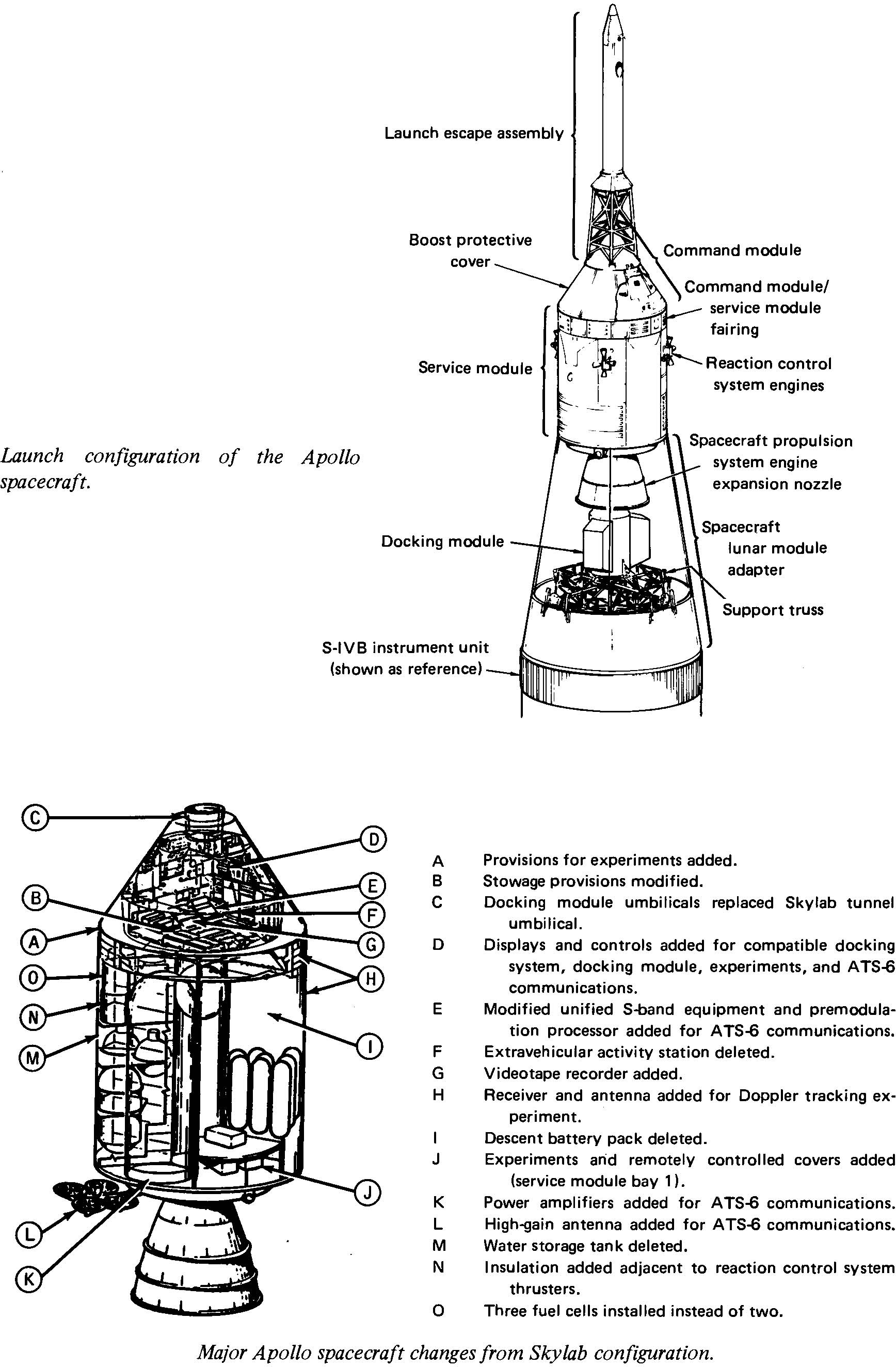
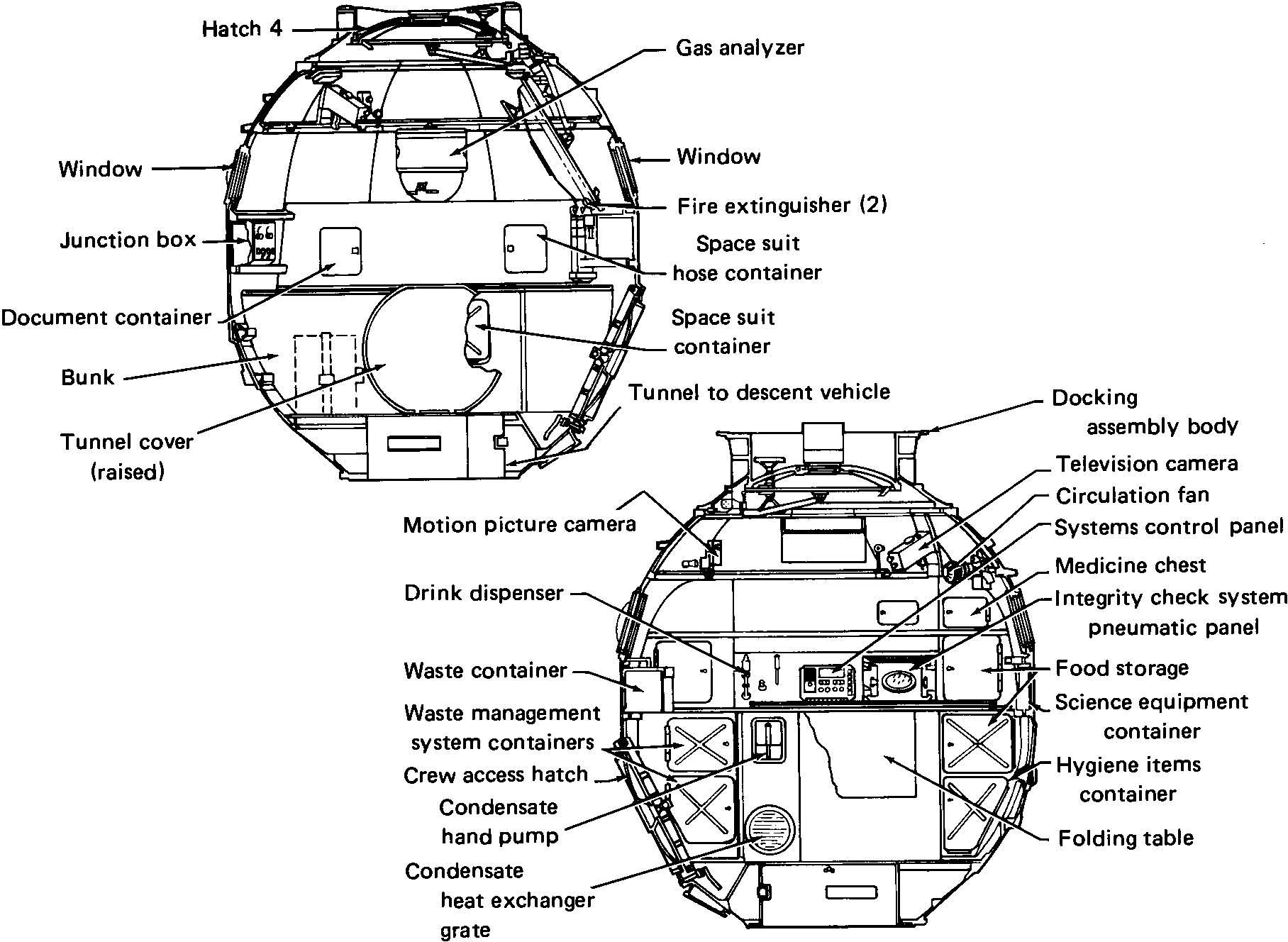
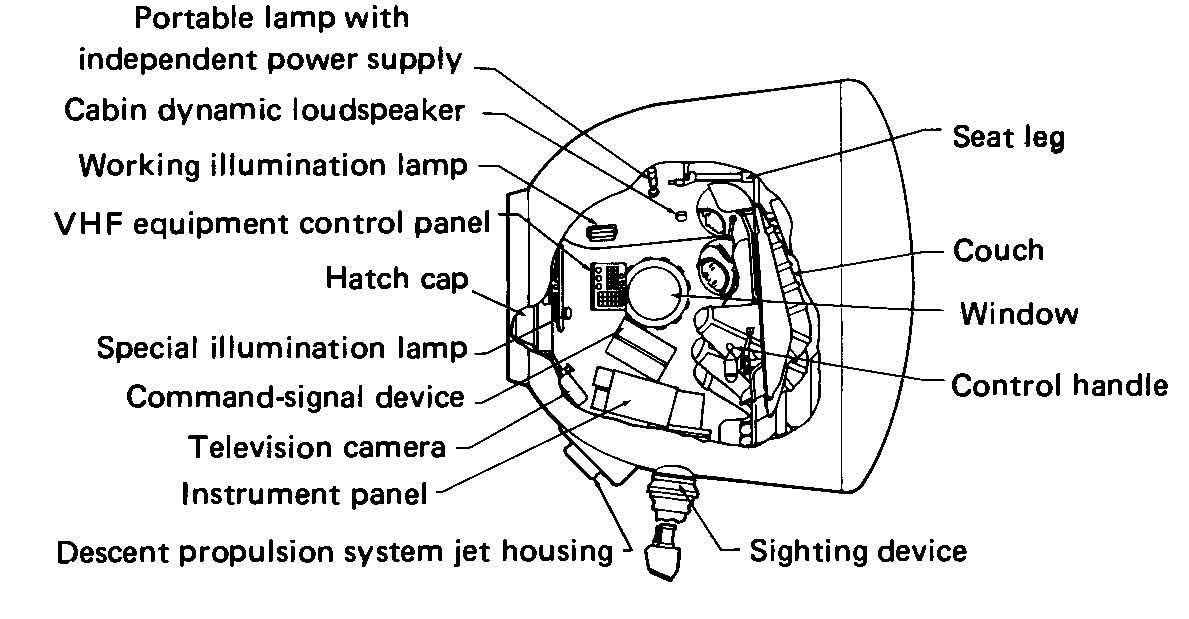
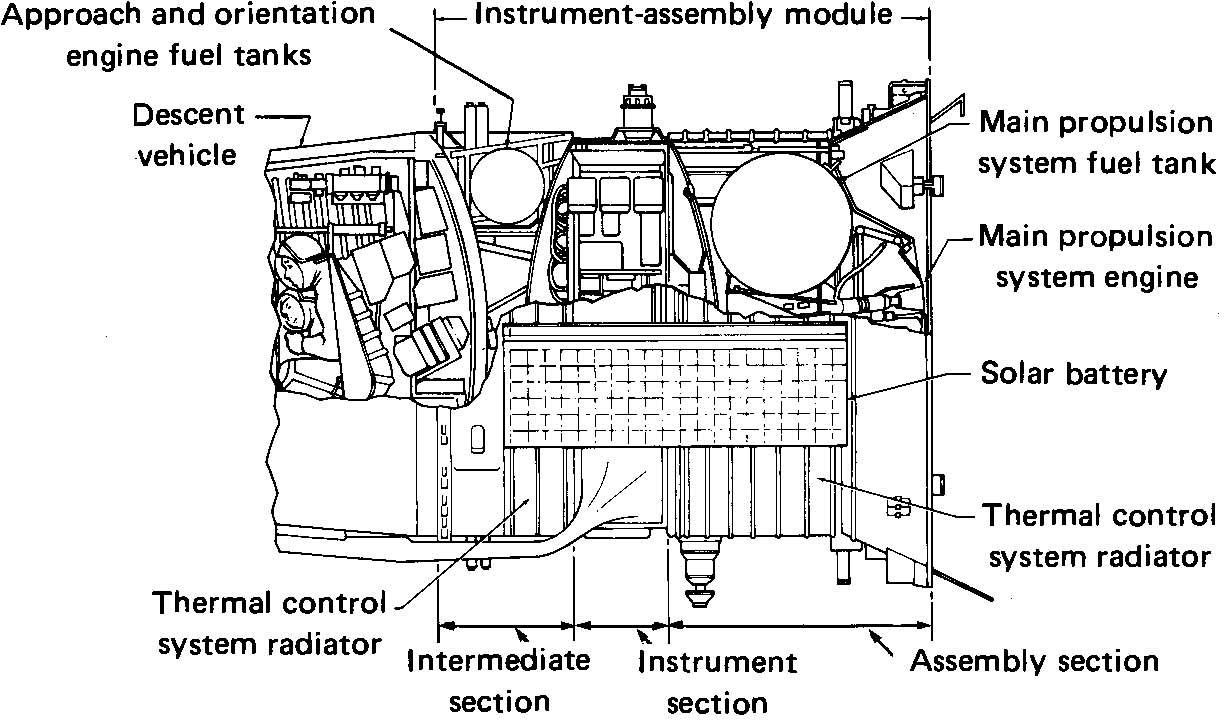
With only 21 months remaining until the scheduled launch, Low thought that October 1973 would be an auspicious time to scrutinize the flight preparations. On 14 August, Low wrote to Keldysh: “it seems to me that it would be wise for you and me to meet at an early date to assess the progress of the ASTP project in mid-course. In particular, I believe we should try to give special consideration to those areas which could most likely present difficulties in the months ahead.” He wanted “to discuss in detail four subjects” -Soviet hardware failures ( Soyuz 11 and Salyut 2), joint participation in test and flight preparation activities, project milestones, and the preparation of documentation. Closing his letter, Low asked if it would be possible to visit some of the Soviet space facilities during his visit. “I would appreciate your suggesting an itinerary, but I would, of course, be interested in visiting installations of the sort you visited at NASA last October.”4
Keldysh’s favorable and warm response, dated 30 August, arrived in Washington in early September. He said that he had “attentively read [Low’s] letter” and agreed that “in such a complex and responsible task, from a technical and organizational point of view ... questions could arise, which would require additional consideration.” He asked that the issues raised by Low be “studied with full attention” before they met in October for their review.5
About a week before his scheduled departure for the Soviet Union, Low received a telephone call from Chet Lee, who was already in Moscow. He reported that Keldysh was ill and would be unable to participate in the review.* Lee added that the Soviets still wanted to have the meeting and were counting on Low’s visit, having arranged tours of several space facilities for him. This trans-Atlantic conversation was followed by an official telegram from Keldysh in which he indicated that he had delegated the Soviet chairmanship for the Mid-Term Review to Boris N. Petrov. When the text of the cable was delivered to the American Embassy in Moscow for transmittal to Washington, V. S. Vereshchetin had told Jack L. Tech, the Science Attache, that Petrov rather than the higher-ranking Kotelnikov would substitute because of Petrov’s close familiarity with the day-to-day management of the project and not because of any downgrading of the review. After consulting Arnold Frutkin, Low decided that they should still travel to Moscow.6
* Earlier in 1973, the Houston-based heart surgeon Michael E. DeBakey had flown to the Soviet Union to operate on Keldysh. After a short recuperation, Keldysh had plunged back into work, so that by the fall of the year he was worn down and exhausted. His physicians ordered him to rest and to refrain from participation in taxing activities.
MID-TERM REVIEW
Low and Frutkin arrived in the U.S.S.R. on the evening of 14 October. Early the next morning, Low met with Lunney, who told him that the work had gone extremely well these past two weeks and that much had been accomplished. The Americans left the Rossiya Hotel and went to the Presidium of the Soviet Academy of Sciences where the Mid-Term Review would be held. That day the teams were kept especially busy with reports to Low and Petrov. After Lunney and Bushuyev told the chairmen that all technical aspects of the program were on schedule, a spokesman from each Working Group presented a detailed schedule of activities and statement of progress in terms of those schedules. Notebooks of Vu-graphs had been prepared in both languages so that all present* could follow the proceedings. R. H. Dietz recalled later that Low appeared eager to determine the exact status of each group’s work. His questions were searching and detailed. Low did not want any problems to appear unexpectedly, and he was taking a strong personal interest to demonstrate to all involved that NASA’s top management expected ASTP to succeed.7
* Americans participating in the review included Low, Frutkin, Lee, Lunney, M. P. Frank, R. H. Dietz, R. E. Smylie, T. P. Stafford, and E. A. Cernan. Soviets in attendance included Petrov, Bushuyev, Vereshchetin, Abduyevski, A. S. Yeliseyev, I. P. Rumyantsev, A. A. Leonov, V. Timchenko, V. P. Legostayev, V. S. Syromyatnikov, B. V. Nikitin, Ye. N. Galin, I. V. Lavrov, and Yu. V. Zonov.
The Technical Directors also reported on a number of important decisions that had been reached during October. Lunney and Bushuyev had agreed to reciprocal participation of specialists as observers during the life support system tests in Moscow and Houston, to joint docking seal tests, and to the participation of American specialists in the pre-flight checkout of the VHF/AM equipment at the Soviet launch site. These and other under- standings reached made Low and Lunney more confident. Still, they pursued the four discussion topics that had prompted Low’s request for the review in the first place.
Project documentation was discussed during the main meetings, during executive sessions, and in private between Low and Petrov. The Soviets had made considerable progress in catching up in all areas of documentation, but Lunney was still concerned that as time grew shorter there would be less time to prepare new documents. Bushuyev believed that the solution to the difficulty was better forecasting of documentation needs. Low and Lunney agreed but added that this was “not the complete solution because we (could) not possibly foresee all problem areas.” Petrov then indicated that he understood Low’s point and promised to keep an eye on the situation personally.8
Low also received the information the Americans had sought about Soyuz 11. During the course of the technical sessions preceding the review, Professor Bushuyev had made a detailed presentation about the failure-post-flight investigation, experimental reenactment of the failure, and steps taken to make certain that it could not recur. According to those present, the release of this information was a personal triumph for Bushuyev and his team since they apparently had to convince many people in the U.S.S.R. that the Americans needed to know all the details. The highly favorable opinion the Americans held of Bushuyev as a tough-minded negotiator and strong-willed manager was reinforced by his report.
The fatal cabin depressurization occurred when a “breathing ventilation valve”* located in the interface ring between the orbital module and the descent module opened inadvertently during the downward path of the descent vehicle, Bushuyev said. At approximately 723 seconds after retrofire, the 12 Soyuz pyro-cartridges fired simultaneously instead of sequentially to separate the two modules. The force of the discharge caused the internal mechanism of the pressure equalization valve to release a seal that was usually discarded pyrotechnically much later to adjust the cabin pressure automatically. When the valve opened at a height of 168 kilometers, the gradual but steady loss of pressure was fatal to the crew within about 30 seconds. By 935 seconds after retrofire, the cabin pressure had dropped to zero and remained there until 1640 seconds when the pressure began to increase as the ship entered the upper reaches of the atmosphere.
* This valve combined the functions of the Apollo pressure equalization valve and the landing ventilation valve.
The extent of tissue damage to the bodies of the cosmonauts caused by the boiling of the blood during the 700 seconds they were exposed to the vacuum could have been misinterpreted initially as being the result of a more catastrophic and instantaneous decompression. Only through analysis of the telemetry records of the attitude control system thruster firings that had been made to counteract the force of the escaping gases and through the pyrotechnic powder traces found in the throat of the pressure equalization valve, were Soviet specialists able to determine that the valve had malfunctioned and had been the sole cause of the deaths.9
Further information presented by the Soviets on the valve and seal failure cleared up the “mystery” of Soyuz 11. Several factors had led to the confusion that surrounded this topic. First, early reports from the Soviets had indicated that the problem was one associated with the spacecraft’s germetizatsyia, which could be translated to mean either the failing of a seal or the loss of air tightness. Thus the Americans were unable to grasp exactly what had happened. Second, the U.S. team thought they had understood I. V. Lavrov’s private remarks to Ed Smylie in December 1971 to mean that the problem lay with the pressure equalization valve, but other Soviet reports had indicated that the trouble started in the seals that guaranteed the hermeticity of the hatch between the orbital module and the descent vehicle. That latter explanation had been given to American reporters by cosmonaut Shatalov as late as June 1973 when they visited Star City. 10 Bushuyev’s explanation ended the speculation, especially since Houston’s environmental control experts could analytically verify the information given them as entirely consistent with the telemetry data reported by the Soviets.
American specialists could also tell Lunney that, as they had thought all along, the problem was not one that could pose a real threat to the safety of the crews during the docked phase of ASTP.11 Nevertheless, this presentation on Soyuz 11 and the fact that the Professor had been able to release the exact details, even though it did not immediately affect the safety of the American crew, was an important step forward in forging a partnership. Both sides had to establish faith in the other’s hardware and believe that it was safe. The Soviets had opened up and talked about an extremely painful subject. It had taken two years for them to do so, but the resulting level of candor, coming as it did at this crucial Mid-Term Review, indicated that both sides were reaching the level of trust necessary to build a genuine space partnership.
Bushuyev also told the Americans that once the problem was recognized and verified experimentally, the Soviet designers had modified their hardware. They had tested the altered system in two Cosmos flights- Cosmos 496, flown 26 June-2 July 1972, and Cosmos 573, flown 15-17 June 1973. The results of these flights had given them confidence in their solution to the problem, and on 29 September 1973, Lt. Col. Vasily Grigoryevich Lazarev, a test pilot and physician, and Oleg Grigoryevich Makarov, a civilian spacecraft engineer, completed a two-day test flight aboard Soyuz 12. Soviet reports indicated that the cosmonauts had worn space suits during launch and reentry, and beginning with this flight, two-man crews would become standard for Soyuz so there would be room to store suits.12 During October, the Soviets reaffirmed their plans to fly two or three manned Soyuz flights in 1974, and they suggested that these ASTP-related missions would fly in the configuration planned for the joint exercise.13
During their executive session, Low told Petrov that he greatly appreciated their report on Soyuz 11 and asked him about those additional failures that had been reported by the Western press during the summer of 1973. Petrov told Low that Salyut 2 was an updated version of the Soviet space station and because of the changes in the design there had been no plans to send men to occupy it. He said further that the 3 April-28 May flight had been designed to test the automatic control system; there was no need to have a crew board the station. While this might have seemed strange to the Americans, the Soviets seemed to rely more heavily on test flights, as opposed to NASA’s use of earth-based simulations. On the subject of Cosmos 557, which had been launched on 11 May, Petrov stated that this flight was not related to the manned space flight program.
A TOUR OF SOVIET SPACE FACILITIES
Following the review, Low was taken to see several space-related facilities. On the morning of 16 October, after making a brief courtesy call on Academician Kotelnikov, Low went to the Institute of Geochemistry and Analytical Chemistry. Director A. P. Vinogradov, ill with a bad cold, instructed his Deputy Director to give Low a tour of the Institute where lunar samples from Luna 16 and 20 and from Apollo 11 through 17 were housed and studied. Next, Low visited the Institute of Space Research and met its new director, Professor R. S. Sagdeyev, with whom he discussed the four spacecraft the Soviets had launched to Mars in July and August. Low’s activities of the 16th were finally completed when he called on Academician V. A. Kirillin, the Deputy Chairman of the Soviet Council of Ministers and i the Chairman of the State Committee for Science and Technology. After Low gave a brief report on the progress of ASTP and other joint projects, Kirillin asked the NASA Deputy Administrator for his views on the practical benefits derived from the exploration of space. They spoke of communica-tions, weather, and earth resources, as well as the potential long-range results of some of their scientific efforts in space. In reemphasizing his point that the future of space must be practical, Kirillin said that one important aspect of earth resources would certainly be the study of geology from space.14
On the 17th, Low and part of the NASA delegation visited Star City. He recorded in his trip report, “I saw more of Star City this time than I had during my previous visit. Of major significance is the amount of new construction underway.... A new training building is being put up especially for ASTP...” That four-story building was to include classrooms, lecture halls, and display rooms for spacecraft subsystems. In addition, the Soviets were building a new hostel and dispensary for the United States team, as well as other buildings to house simulators and a new and very large centrifuge. When the NASA contingent visited the Soyuz simulator, Alexi Arkipovich Leonov, the Soviet ASTP crew commander, briefed them on the changes that had been made following Soyuz 11. Besides removing the third couch, engineers had installed pressure suit connections and new pressure relief and shut-off valves. Valeriy Nikolayevich Kubasov, the second member of the Soviet ASTP crew, gave the visitors a brief description of the Soyuz space suit, which was modeled by a technician. This relatively lightweight garment was the same type they planned to use in the joint flight. Leonov pointed out that it took about 5 minutes to don the pressure suit, and Low noted that since it was only worn for about 2 hours at a time there were no provisions for waste removal. The last thing Low did at the Cosmonaut Training Center was to tour the Salyut mockup, with the assistance of K. P. Feoktistov.15
On the morning of the l8th, the Americans were taken to the Soviet Mission Control Center at Kaliningrad, by car about 45 minutes northeast of Moscow. The center was situated within a large complex of buildings, and the Americans were told that the facility had been used in the past for unmanned flights but that Soyuz 12 had been directed from here. The Soviets planned to direct future Soyuz missions, including ASTP, from Kaliningrad. Low and his colleagues were met by Dr. Abduyevski, Deputy Director of the Control Center, and cosmonaut Yeliseyev, who had been selected as Soyuz Flight Director for ASTP.
Yeliseyev conducted a briefing, using wall charts in Russian and English to explain how the control center functioned. He also described the flow of information within the center and the organization of the flight controllers within the mission operation control room. When the cosmonaut led the U.S. team onto the balcony overlooking the control room, they saw a facility that was strikingly similar to Houston control. “As we entered,” Low reported, a video “playback of the Soyuz 12 countdown was in progress. Across the top of the front wall were a number of clocks showing Moscow time, elapsed time, station acquisition time, and station loss of signal time. The top of the center screen was a world map with a lighted dot indicating the spacecraft location.” On a screen to the right was a television picture of the spacecraft and booster at the launch site. From a typewriter keyboard at the back of the room, a technician typed a message that appeared on the bottom half of the right screen-“Welcome American colleagues.”
Low was favorably impressed. He further described the facility:
On the floor were four rows of consoles. The very back row, which is out of sight from the balcony, is for the people who set up the communications and data flow within the Control Center. Also the project director (Bushuyev) will sit in this back row. The flight director is on the next row from the back and is the focal point for all activity in the Control Center. To his left and right, and in the two rows of consoles in front of him, are the various support functions, which are pretty much the same as the functions within our own control center, except that there is no launch vehicle console. Each console has a number of television screens, and the flight controller at that console can call up all sorts of displays.... The communication system allows the flight director to talk to any or all of the other consoles as well as to the back rooms.16
The Americans learned that the control center takes over after the spacecraft has separated from the launch vehicle in orbit. Until that time, the flight is under the full control of the launch center. During a question and answer session, the Soviets responded fully to all of the technical queries raised by their visitors. George Low’s trip to Moscow had been both useful and informative. Petrov had told the NASA representatives that Star City, the Kaliningrad Control Center, and the Baykonur launch complex would be open to American specialists as necessary. Low was especially pleased to hear this since Tom Stafford, the American ASTP crew commander, had expressed a strong desire to see the actual Soyuz flight hardware during the pre-flight checkout. But still to be decided when the U.S. team departed were the details concerning access for American newspaper and television reporters to those same facilities.
PUBLIC INFORMATION PLANS
October in Moscow was notable for more than just the Mid-Term Review. It was also the first time that NASA Headquarters public affairs personnel attempted to negotiate with the Soviets. Before this, John P. Donnelly and his deputies, Alfred P. Alibrando and Robert J. Shafer, had been participating in the public affairs planning process from a distance. But once they began to take a more active role, expressing their desire for face-to-face discussions with their counterparts, they discovered that their requests-even their very presence-were regarded as an intrusion by Glynn Lunney and the others in Houston who were managing the negotiations. It appeared to Donnelly that the Johnson Spacecraft Center (JSC) was reluctant to share that responsibility with him because the technical teams feared that the introduction of new faces would tend to slow the negotiations. But Donnelly was eager to participate because he was concerned that the technical personnel working for Lunney, in their efforts to meet the launch deadline, might make agreements with the Soviets that could undermine NASA’s public affairs policy of full disclosure. Looking back, Low explained the different motivations underlying the negotiation objectives of the Public Affairs and Program Office personnel:
The project people had essentially one basic goal and that was to make the project succeed. Anything which would make attaining that goal more difficult would and should be opposed by the project people. Thus, a negotiating position which might “upset” their Soviet colleagues would be something that the project people would want to avoid if at all possible. The Public Affairs people on the other hand saw a tremendous opportunity for the United States to show “detente” in its best light. They also saw the need to maintain NASA’s open position with the world press and the credibility which NASA has achieved in dealing with the news media. To attain these Public Affairs’ goals might entail taking very hard negotiating positions-harder than the technical people would like to have seen on a non-technical issue.17
These essentially opposing positions led Low to annunciate two principles in a number of meetings that he held with Donnelly, Shafer, Frutkin, Lee, and Lunney. First, Donnelly could not do anything that would cause the overall negotiations to come to a halt or to fall apart. As Low reported, “this meant that Donnelly would have to check with me before getting himself into a position where hard lines would be drawn-lines that would lead to a major confrontation.” In Low’s view, “the Public Affairs people did a remarkable job in avoiding such confrontations.” Second, the public exposure of the project-especially television-was a major objective of ASTP, accorded as high a priority as everything else in the project except flight safety. This meant that the project people subsequently had to alter flight plans and the like to accommodate in-flight television as required by Public Affairs. Low pointed out that “This was a change from the way we had operated in previous programs, a change which I believed to be necessary for this special project.”18
Release of information about the joint mission was an area in which NASA personnel had anticipated possible difficulties from the earliest stages. One line in the Low-Kotelnikov agreement of April 1972 had addressed the issue of public information: “A public information plan will be developed which takes into account the obligations and practices of both sides.” That phrase combines both genius and difficulty. It gave both sides what they wanted-control over mission-related news-but it did not explain how those two sets of obligations and practices would be reconciled. George Low and his colleagues in the American space agency firmly believed that they could not enter into any agreements that would lead to the alteration of NASA’s policy of immediate and full public disclosure. This “real-time” release of audio, video, and other news materials had provided momentary embarrassments in the early days of the program (the failure of MA-1 shortly after lift-off in July 1960 or the sinking of Gus Grissom’s spacecraft after his suborbital flight in July 1961), but live television had also covered the most dramatic moments of the space age as well (man’s first steps onto the lunar surface or the repairs the first Skylab team made to their damaged laboratory).
Traditionally, the Soviets had released information about their missions only after the fact. And they had not engaged in extensive use of television, preferring instead to tell the space story through newspapers and motion pictures. Therefore, NASA and the Soviet Academy had to reconcile two issues-real-time versus after-the-fact news coverage and reliance upon different media forms. As Headquarters and JSC public affairs representatives were to discover, their requirements for live television broadcasts from Apollo and Soyuz were to be often in conflict with the Soviet desire to make motion pictures of the same events. Skillful negotiations were required to satisfy the obligations and practices of both sides.
Before they could discuss such matters with the Soviets, the Americans needed to agree among themselves. As the Assistant Administrator for Public Affairs, Donnelly had been interested in the public information aspects of the joint mission since the early days of the talks, but his team at Headquarters had only begun to work actively on the topic at the time of the May 1972 Nixon-Kosygin Summit. On 19 May, Bob Shafer had written a memo to Donnelly in which he outlined actions that would have to be taken once the international rendezvous and docking mission was officially announced in Moscow. “First of all, I think we’ve got to come to terms with the White House and State on the overall public affairs/public information responsibility for the mission. We’ll have to take the initiative on that as soon as possible.... we need a meeting with Lunney and those of his superiors and subordinates who are actively working with the USSR team.” Objectives of such a meeting were:
to establish our responsibility for public affairs planning and implementation concerned with IRDM [International Rendezvous and Docking Mission] ; to define the interface between Public Affairs and project management; to get a better understanding of their working relationship with members of the USSR team so that we can pattern ours accordingly wherever appropriate; and to identify what we believe to be sensitive areas we must accommodate in one manner or another as we proceed so that we do not unwittingly disrupt the progress of the cooperative effort.19
Once the role of the Washington Public Affairs Office was finally clarified, Shafer would then recommend that a meeting take place with “appropriate representatives” in the U.S.S.R. to address the development of a public affairs plan. He continued, “All of this, it seems to me, is urgent,” and he thought that the Headquarters public affairs staff should be ready to talk with the Soviets “by the end of September at the very latest.”20 But planning public affairs activities for Apollo 17 and Skylab took much of Donnelly’s and Shafer’s time, so they were unable to touch base with the people in Houston for nearly a year, and it was not until October 1973 that they had an opportunity to meet with the Soviets.
Meanwhile in Houston, Lunney and the JSC public affairs staff had already taken the initiative in developing procedures for the release of newsworthy information generated during the joint meetings. When the idea of a Public Affairs Plan was first raised, Lunney recommended that the proposed plan be broken into two parts-pre-mission joint activities and actual in-flight joint activities. He reasoned that a single document would be too much to negotiate at one time. Furthermore, it was still too early to clearly define all of the flight-related public affairs activities. By starting with the pre-mission issues, the two teams could learn more about each other’s obligations and practices and give the flight planners an opportunity to more fully map out crew activities that would affect the second part of the plan.21
By January 1973, John E. Riley of the JSC Public Affairs Office had developed a draft of the first half of the Public Information Plan. This early version stated: “NASA proposes that the ASTP public information activities be governed by two documents.” The first was planned to “deal with pre-flight activities, including actions of Joint Working Groups; hardware development and manufacture;[*] training of flight crews, engineers, flight controllers and other personnel involved in the mission; simulators and tests; and control center preparations requiring joint activities.” The other document’s purpose was to cover flight and post-flight activities.22 After several versions of Part I of the plan had been drafted, JSC’s Public Affairs Officer, John W. King, forwarded the document to Chet Lee in Washington.23
* Hardware development and manufacture was dropped from subsequent JSC drafts.
Lee circulated the proposal at Headquarters, seeking comments particularly from the Public Affairs and International Affairs Offices. By mid-February, Donnelly and Frutkin approved a revised draft of Jack King’s information guideline, and they sent a copy to the American Embassy in Moscow for comment.24 Lee responded to this “most recent draft of the proposed ... information plan” by saying that “it contains new provisions I believe are not conducive to continued smooth relations with our Soviet counterparts.”25 Four major changes bothered him. One of these related to the issue of status reports. The earlier drafts had provided that status reports of “joint working group meetings and joint activities... be issued by the host country and the contents approved mutually prior to release.” In the Donnelly-Frutkin approved version, the document read: “each country may issue status reports and ... the substance of reports will be provided in advance to the head of the other side’s delegation.” Lee argued that this was “a clear deviation from our methods of operation with the Soviets in our joint meetings to date.” He believed that the existing system should be continued since it had “functioned smoothly and to our knowledge has not put any undue constraint on information released to the press.”26 In a joint memo to Lee, Donnelly and Frutkin responded that they did not want the “ASTP Information Plan [to] make US media residents in the USSR dependent on the Soviets for news of ASTP activities.” In their opinion, the original proposal did so since the host country could determine the content and frequency of status reports, “based upon its obligations and usual practices.” As an alternative to their proposal, Donnelly and Frutkin suggested the following, which Lee found acceptable:
During meetings of Joint Working Groups and during joint activities of flight crews and other mission personnel, the US and USSR heads of delegations may issue joint status reports to the news media. Joint status reports are expected to be the usual procedure, but if either side wishes to issue status reports to news media on its own side, in accord with its normal obligations and usual practices, it may do so after notice of the substance of the release to the head of the other side’s delegation present.27
After similar horse trading at Headquarters on the other three points, which all dealt with different aspects of the same question-equal treatment of American and Soviet press representatives in the Soviet Union-JSC was permitted to give NASA’s draft of “ASTP Public Information Plan Part I” to the Soviets during the March 1973 meetings. Later during the July sessions in Houston, the Soviets said that they had no basic objections to the draft text but that they did want to modify some of the language. They would submit their comments by the end of August. In July, there had also been some discussion on the joint production of a post-flight motion picture that would summarize the project. That film, the signing of Part I, and discussions of the content and schedule to be followed in negotiating Part II were placed on the agenda for October.28
Although Glynn Lunney had planned to send only Jack King to Moscow, John Donnelly asked that he too be permitted to participate. Donnelly specifically wanted to go because there had been no response from the Soviets since the July meeting regarding the public affairs topics. And he insisted that Bob Shafer accompany him so that they could discuss television issues with the Soviets. Both men were worried that if left to the technical people, ASTP might occur in the dark, and they wanted the broadest possible television coverage for this mission. After considerable discussion, during which Donnelly and Shafer took their case to George Low, the two men departed for Moscow with King.29
Upon their arrival, they were met at the airport by Nikolai Vasilyevich Khabarin from the Council for International Cooperation in Space Exploration and Use (Intercosmos). During their ride into the city, Khabarin grilled Donnelly, apparently so he could determine who this new American was, how much authority he had, and where he fit into the NASA hierarchy. Shafer recalled later that the question and answer session was getting nowhere until Arnold Frutkin’s name came into the discussion. Khabarin asked Donnelly how his position compared to Frutkin’s. Donnelly told him that they were at the same level, both being Assistant Administrators. Khabarin responded that Frutkin reported directly to George Low, and Donnelly came back with, “So do I.” This discussion, which went on to include questions concerning the relative sizes of the staffs working for the two men and so on, gave the Soviets some understanding for how these new faces fit into the NASA scheme of things.
Donnelly compared his first meeting that October with his Soviet counterpart, Igor Pavlovich Rumyantsev, to the sparring two boxers do the first time they meet in the ring. “We were feeling each other out. Clearly we didn’t trust them, and they didn’t trust us.”30 Questions of trust were to surface several times during this meeting. Shafer recalled that Rumyantsev came into the room where they had all gathered and made a formal statement about how good it was for them to be together and to be working towards this joint flight. But he wanted to know why NASA had called for this meeting and what exactly they wished to discuss. Donnelly explained that they were there to complete work on Part I of the Public Affairs Plan, to discuss the joint movie, and to begin work on outlining Part II. The Americans spent the rest of the day explaining to the Soviets what they meant by public affairs and what NASA hoped to accomplish in negotiating both halves of the plan. Rumyantsev, an Intercosmos staff member, was a professional negotiator in international matters, but he was not an expert on public affairs. It took a while for him and the other Soviets to fully comprehend what Donnelly and Shafer meant by full and open disclosure of information to the press. It also took time before they were convinced that neither NASA nor the American government in any manner managed the press. The obligations and practices of the United States and the Soviet Union were quite different and not easy to reconcile.
Donnelly’s negotiating stance with Rumyantsev was by his own admission hard-nosed. And as a result, the process was a slow one. After several days of talks, Donnelly discussed their progress on Part I with George Low on the evening of 15 October. Low then decided to meet directly with Petrov, who as Chairman of Intercosmos was Rumyantsev’s boss. On the 17th, Frutkin and Low met in their hotel room and tried to clarify a plan for their discussions with the Soviets. That next morning saw Frutkin and Low come to agreement over the Public Information Plan with Petrov, Veresh-chetin, and Rumyantsev.* While Low and Petrov did not sign the resulting document, preferring to wait two weeks for formal ratification, Donnelly and Rumyantsev affixed their signatures to “ASTP Public Information Plan Part I,” ASTP 20 050, as an indication of good faith, as did Lunney and Bushuyev. Final ratification of this much-debated plan came in November when Kotelnikov notified Low that the Soviet side accepted the modified language drafted in Moscow.31
* Also present were Donnelly, Lee, Lunney, Bushuyev, A. I. Tsarev, and V. I. Kozorev.
Donnelly and Shafter learned from their trip to Moscow that negotiation was more art than science. Two other sticky topics discussed during October illustrated that point. The Soviets dearly wanted a jointly produced motion picture describing ASTP. A jointly produced movie would be another visible indication of cooperation, and equally important, the two countries would share the cost of producing the film. Furthermore, the idea of a movie was particularly attractive to the Soviets since they could show it in State theaters as a major feature attraction, but NASA did not expect U.S. movie houses to desire such a production, and it seemed equally unlikely that the television networks would buy the lengthy documentary. Such a film fit one system, but it did not meet the obligations and practices of the other. Lunney advised Bushuyev back in September 1973 that the Americans did not favor this project, but Donnelly and Shafer had to tell them again that NASA would not enter into such an enterprise. Being the bearers of such bad news did not enhance their rapport with their newly found colleagues, nor did their insistence on a second issue-equal treatment for American newsmen covering ASTP in the U.S.S.R.32
Early in their talks on the 10th of October, Rumyantsev had told the Americans that it would not be possible to invite every American correspondent who resided in Moscow to all ASTP press conferences. When Donnelly asked why, Rumyantsev said that the room where such gatherings were held was too smali to accommodate them all. Donnelly said that the Soviets would simply have to find a larger room, but his counterpart replied that it was impossible to alter the location of the briefings-all press conferences were held in that room! He indicated that the Soviet solution to the space problem was to limit the size of the press delegation. Donnelly was told that in previous technical negotiations, the Americans-over the objections of Eli Flamm, the Press Attache at the American Embassy-had agreed to limits on the size of press contingents, as long as equal numbers from both sides were permitted to attend. Donnelly argued against such restrictions, saying that they were only valid when genuine physical restraints existed, such as those at the training facilities at Star City. But he was against arbitrarily imposed limits, holding them unreasonable and contrary to the spirit of the Information Plan they were trying to establish. According to Donnelly, this was nothing less than “censorship by selectivity.” The men suspended their negotiations for the afternoon at a loss for agreement.33
On the following morning, Rumyantsev approached the Americans. As Shafer recollected, the Soviet negotiator proclaimed, “Mister Donnelly, there is an answer! It is called a pool!” In making their proposed alteration, the Soviets had a completely different understanding of that concept than did the Americans. “Their suggestion was that we dictate the pool-that we go to the U.S. correspondents and say, ‘Form a pool and take it here.’ “ Donnelly told Rumyantsev that press pools in the West did not work that way. The news representatives selected the members of a pool delegation when they had been informed that a particular activity would allow only a small group to attend. NASA could not and would not determine pool membership. After a discussion that lasted nearly the whole day, a breakthrough occurred when Donnelly inquired if the source of their problem lay with the size of the Soviet delegation and not with the size of the American contingent. Rumyantsev replied that Donnelly was beginning to understand.34 To take into account the Soviets’ desire to limit the number of Soviet correspondents that might be invited to a news briefing, the following language was drafted into Part I of the plan: “For each joint-activities event, each side may designate the number of accredited press from its side to be invited, taking into account its own customs and traditions.”35
Donnelly also persuaded Rumyantsev to accept another principle-“with the exception of situations in which physical limitations make it impossible, all accredited U.S. correspondents would be invited to pre-mission news events.”36 “In situations where physical or technical limitations require, the host country may propose that the news media establish pooled coverage.”37 Despite this agreement, Shafer later wrote Donnelly that the question of full representation for American media personnel in Moscow had been the “principal issue which divided the two sides during our negotiations of Part I ... [and] seems likely to reappear from time to time.”38
The Americans’ concern about equal treatment for the American press was well founded. American correspondents, with their noses for news and penchants for investigative reporting, did not always have the best of relations with the Soviet government. These newsmen were seldom happy with the handouts they received from government news agencies, and the Soviets rewarded only those reporters whose stories were positive. Americans often criticized the Soviet practice of late night phone calls to select reporters concerning news events that would occur the following day. In the case of ASTP, they wanted free access to news events, and they expected NASA to protect their interests. This posed several problems. NASA could try to guarantee them full access to joint events, but the agency could not assist them in their desire to cover unilateral Soviet activities. The Information Plan stated: “Decisions related to news media access to independent activities are the unilateral responsibility of each country in accordance with its established traditions and practices.”39 Nor could NASA shield the resident media representatives in Moscow from non-resident correspondents who managed to get special visas that allowed them to interview cosmonauts or members of the Soviet Academy. Donnelly argued that the resident press would have to fight those battles through their home offices; after all, competition was one of the aspects of a free press.40 Though they could not protect American correspondents from each other, NASA public affairs people could ensure that they had equal access to information.
Equal access to ASTP news events only came with much hard work. The talks held in October 1973 were just the beginning. Part II of the Public Information Plan (especially the discussion of real time television) was to involve far more complex and lengthy negotiations. A final agreement on the mission-related news coverage would not be completed until three months before the launch, and drafting a plan was only the first step. As Jack Riley discovered in November 1973, a formal plan did not exist for the Soviets until it was officially ratified. A couple of days before the end of the astronauts’ first visit to the Soviet Union in November 1973, Valentin Ivanovich Kozorev, Scientific Secretary of Intercosmos, approached Riley to tell him that the Soviets would like to use one of the photographs that they had received from NASA during the June-July 1973 cosmonaut visit to JSC to illustrate an article they planned to publish. Kozorev had been instructed to obtain Riley’s permission to use that photograph. Riley reported on this conversation:
I responded that they were free to use any of the photos provided by NASA and that there were no restrictions on their use for news purposes. I said that we planned similar use of the photos we received from them.
Kozorev thanked me profusely and then said that he regretted that he could not be as generous as I had been. He said that we would be given five or six photos before we left and that we would require permission from them on a picture by picture basis.41
Kozorev referred to the photographs taken at the control center in Kaliningrad following the Mid-Term Review. He said that “Dr. Lunney” had asked the Professor for permission to release those illustrations to the American press but Bushuyev still had not secured authorization. When Riley mentioned that the release of such items should be covered by the photography exchange section of Part I of the Information Plan, he “was told for the first time flat out ... that the Soviets did not consider the plan to be in effect yet.” Kozorev indicated that the Soviets had sent the plan to Washington for Low’s signature but it had not been returned yet. Until they had a signed copy in their hands, the plan was not operative.
Kozorev apparently believed that his position would cause Riley to reconsider his “generosity,” because he again asked about releasing the photographs they had received from Houston. Riley told Donnelly in a memo, “I got the impression that he was somewhat ill at ease with his position and would have felt justified if I had changed my mind and insisted that they too would have to get permission for each individual photo.” Instead Riley told Kozorev that they both knew that the plan had been approved and were only waiting for formal notification. “I intend to operate under the spirit of the plan even though formal signed documents were not yet available, and I repeated that they were free to use photos obtained from NASA.”42
Kozorev and Riley also had a second discussion dealing with the participation in ASTP news conferences of correspondents from countries other than the United States and the Soviet Union. Several days before the 29 November briefing marking the end of the astronaut familiarization tour, Kozorev asked Riley whether NASA objected to newsmen from other countries attending. Riley told him that it was NASA’s policy to welcome any accredited reporter, irrespective of nationality. Again Kozorev thanked the American public affairs representative and added that he would tell the several foreign correspondents that they could participate. Early on the morning after this press conference, however, Riley received a telephone call from a West German reporter who asked if there would be an opportunity for him to talk with the astronauts before they departed. Riley later informed Donnelly:
I responded that we were leaving that day and that a news conference had been held the previous day. He said that he knew about that conference but when he asked to attend, he was told by Soviet authorities that NASA had requested that only American and Soviet correspondents be permitted to cover the conference and, therefore, they could not permit him to attend.43
Riley passed the reporter’s complaint on to Donnelly with the information that several East European reporters had been present during the news session with the crews. Riley went further to note that Eli Flamm at the Embassy could not understand the exclusion of this particular individual since he normally had an excellent relationship with the Soviets. By early 1974, Donnelly and the others working on the NASA public affairs team had learned that they had a difficult task ahead of them.
A REPORT TO CONGRESS
Despite these difficulties with public affairs, George Low was still genuinely optimistic about the prospects for a successful flight. And even on topics such as public affairs, there was hope since NASA had not given up any of its traditional openness and since the Soviets seemed willing to negotiate in good faith. So upon his return from the Soviet Union, Low touched base with Chairman Olin Teague of the House Committee on Science and Astronautics. In a letter, he told Teague about his various chats with the Soviet space leaders, summarized the results of the joint talks, and described his visits to the space facilities. Among the significant results produced by the Working Group sessions, Low noted:
It was agreed to conduct five joint scientific experiments on the mission involving biological interaction, microbial exchange, a multipurpose furnace, artificial solar eclipse and ultraviolet absorption. [*]
It was agreed that there would be reciprocal participation of US and USSR specialists in preflight fit checks at the launch site of compatible hardware such as TV cameras, speaker box, etc. in the flight Soyuz and Apollo spacecraft.
With regard to the Apollo VHF/AM communication equipment, it was agreed that the US specialists will participate in the checkout of the equipment after delivery to the USSR and also during the preflight checkout of this equipment in the flight Soyuz at Baikonur, the Soviet launch site.
In addition to these agreements, improvement was noted in the preparation of plans and documents, particularly in the Communications Working Group. All documentation is essentially now on schedule.44
* Detailed descriptions of ASTP experiments are presented in appendix E.
Low advised Teague that these agreements would “materially contribute to a successful mission and ... [were] a good indication of the Soviets’ commitment to making this mission a success.” Turning to the Mid-Term Review, the Deputy Administrator reported that “The Project Technical Directors ... and the Working Group Chairman made detailed presentations” to Academician Petrov and me “and responded to all questions.” As a consequence of this exercise they had “concluded that the progress made and the quality of the joint work to date [gave them] high confidence that the scheduled launch date [would] be met.* 45
Privately Low was equally confident of success, particularly considering the international scene at the time. On 6 October, the fourth major war between the Arab states and Israel had erupted wen troops from Egypt, Syria, Iraq, and several other countries attacked. The Yom Kippur War had raged throughout the stay of the Americans in Moscow, with the U.S.S.R. and the U.S. airlifting arms to the opposing sides. And on 17 October, the Organization of Arab Petroleum Exporting Countries had announced a coordinated program of oil production and export cuts to those nations that supported Israel.46 Jim Jaax of Working Group 5 recalled that he and his colleagues only learned about the war when one of the interpreters read of the conflict in a Soviet newspaper during a bus ride from the Rossiya Hotel to the Institute of Space Research. In their isolation, they had had no other indications that a war was being fought in the Middle East.47
Potentially as disruptive to the Soviet-American space efforts had been the U.S. National Academy of Sciences’ protests to the Soviet Academy concerning the “heightened campaign of condemnation” being waged against dissenting Academician Andrei Dmitriyevich Sakharov. The President of the American Academy had cabled Keldysh in September 1973 regarding the matter and had subsequently published the text of his message in Science on 21 September.48 Low, commenting on these problems, said, “Although we were in Moscow during an international crisis and during the exchange of letters between the U.S. and Soviet Academies on the Sakharov affair, neither of these subjects came up at any time during our visit.”49 Low noted that one New York Times article concluded: “the warm treatment of Mr. Low and a team of American specialists, working with their Soviet counterparts to prepare for the Apollo-Soyuz mission, was read as a deliberate gesture by Moscow to emphasize its interest in Soviet-American cooperation and detente despite the frictions of the Middle East conflict.”50
At the end of 1973, a successful flight in July 1975 seemed probable. The Soviet and American teams had made considerable technical progress and, despite the tight schedules and heavy work loads, were confident. ASTP and are into deport a wordib the eling mup intervational rises also seen the two crews begin to work out the details of joint training. The day of rendezvous was approaching.
- Glynn S. Lunney to Konstantin Davydo-vich Bushuyev [signed 24 Aug. 1973, but an earlier draft appears in the files dated 7 Aug. 1973 apparently prepared before Low's letter to Keldysh of 14 Aug. 1973].X
- Lunney to Bushuyev [24 Aug. 1973].X
- Ibid.X
- George M. Low to Mstislav Vsevolodovich Keldysh, 14 Aug. 1973. The two teams had discussed Salyut 2 and Soyuz 11 in some detail at the joint meetings in July 1973 in Houston, but Lee and others thought that additional information was necessary. See Chester M. Lee to Dale D. Myers, memo, "US/USSR July Working Group Meeting," 25 July 1973.X
- Keldysh to Low, 30 Aug. 1973.X
- TWX, Jack L. Tech to Arnold W. Frutkin, "NASA Delegation Visit to USSR," 4 Oct. 1973; TWX, Oscar E. Anderson, Jr., to Frutkin and Low, "NASA Delegation Visit to USSR," 5 Oct. 1973; TWX, Low to Keldysh, 10 Oct. 1973; and Michael E. DeBakey to Edward C. Ezell, 25 Feb. 1976.X
- Low, "Visit to Moscow, October 14-19, 1973," Dec. 1973; and interview (via telephone), Reinhold H. Dietz-Ezell, 18 Feb. 1976.X
- Low, "Visit to Moscow, October 14-19, 1973," Dec. 1973; and ASTP notebook, kept by Leonard S. Nicholson, for 1973.X
- Low, "Visit to Moscow, October 14-19, 1973," Dec. 1973; interview, Walter W. Guy-Ezell, 12 Sept. 1975; Thomas O'Toole, "Valve Mishap Blamed for Soyuz Deaths," Washington Post, 29 Oct. 1973; and John F. Yardley to Low, memo, "Soyuz I1 Failure ," 3 Mar. 1975.X
- Donald C. Winston, "Soviet Space Center Being Expanded," Aviation Week & Space Technology, 25 June 1973, p. 18; and "Soviet Space: A Visit to Star City," Time, 9 July 1973, pp. 44 and 47.X
- Interview, Guy-Ezell, 12 Sept. 1975.X
- NASA, JSC, "Apollo Soyuz Test Project Presentation to Manned Space Flight Subcommittee Staff," 15 Nov. 1973; "2-Day Soviet Flight," Facts on File 33 (30 Sept.-6 Oct. 1973): 814-815; Theodore Shabad, "Soviet Puts Soyuz with 2 Aboard into Earth Orbit," New York Times, 28 Sept. 1973; and Murray Seeger, "Soviet Union Launches 2-Man Space Mission," Los Angeles Times, 28 Sept. 1973. To correct the problem encountered on Soyuz 11, the Soviets redesigned the valve and seal, improved the manual valve closing so that it took fewer turns of the handle to close it, reduced the power of the pyrotechnic bolts and replaced half of them with pyrotechnic/gas actuated latches, and provided for the crewmen to renter in pressure suits.X
- Low, "Visit to Moscow, October 14-19, 1973," Dec. 1973.X
- Ibid.X
- Ibid.X
- Ibid.; and Low to Olin E. Teague, 31 Oct. 1973. M. Pete Frank also had a favorable evaluation of the Soviet facilities at Star City and Kaliningrad. In a memo, Frank to distribution, "October 1973 Working Group 1 Meeting," 31 Oct. 1973, he wrote the following about the control center:
XTour of the Soviet Mission Control Center:
The control center that will be used for the ASTP mission is located in a tightly secured complex northeast of Moscow. It is in an area called Kaliningrad just off the Yaroslavl highway. It took us about 40 minutes to reach the control center from the Rossiya Hotel....
The building in which the control center is contained was only one of many buildings inside this complex . .. surrounded by a high brick wall and . . . heavily guarded at the entrances. The buildings looked fairly new and were modern with very large glass windows. ... The control center is nestled in among other buildings that have something to do with their space program.
As far as general comments regarding the tour, it was a very detailed and comprehensive tour. I think the Soviets went out of their way to make the point that they were showing us everything. They were not holding anything back. They even showed us work areas (just office space) in the control center; and as we would go down the hall, they offered to open any of the doors....
The tour began with an initial briefing of the flight control and the operations aspects provided by Yeliseyev. The overall tour was conducted by Dr. Albert Melytsin who was called the Technical Director of the Mission Control Center. I have the feeling that he was responsible for the construction and operation of the facility. Yeliseyev's briefing covered two areas: the first was the organization of their flight control operation; the second was the flow of information from the tracking stations into the control center....
I was impressed by the quality of the equipment in the control center; I thought it was similar to ours. I was also impressed by the similarity of the flow diagrams of infosmation from the tracking station to the control center. It seemed to include all the elements of our own system.
The mission operations control room was quite large-it contained 16 two-man consoles, thus allowing them 32 flight controllers. I don't know how many they actually use for a mission, but there are capabilities for 32. In addition, there was a back row of consoles which were used for personnel such as the project technical director; this back row is also a work station for display controllers who control the main display boards in the front of the room. These large displays had a map with an orbit plotted on it with a computer driven indicator for the spacecraft position as it flew across the earth. There were digital indications of time and AOS and LOS times across the top of the screen; there were two large television screens about 10'x 10' on the right-hand side which could be configured for special displays; the consoles were equipped with a television display and communication panels. I think their communication capabilities were somewhat less than what we have, but there was some flexibility in that the flight director could call up people on individual basis or everybody at once to talk or listen. The television display system is capable of 100 different formats. These are changed from one mission to the next and can be selected by the local console operators simply by dialing up the proper number. The television system can display closed circuit views such as we have from the staff support rooms. It can also display digital data in real time from the computer system, and it can be used to display general information that is typed into a central display unit. It looked to be a very flexible system although I do not think it had anywhere near as much capability as our digital television system. In the back of the MOCR, the Russians have a balcony with several dozen seats which serve as a VIP viewing room; however, it is not glassed off (isolated) from the MOCR and it sits up at an elevated level. (It is interesting to note that although the equipment appeared to be very high quality, I had the definite feeling it did not have the performance capability we have.)
Next the Soviets took us on a conducted tour around the building showing us the various staff support rooms in which the flight controller support teams function. They had similar television display capabilities and were able to communicate with their tegm leaders in the MOCR in a manner similar to the way we do.
The Russians showed us the teletype stations where messages are processed to send out to the remote sites; they showed us the telemetry ground stations and a room where a large number of chart recorders were used to "monitor data quality" as it comes in from the remote sites.
They showed us the computer facilities, which were very interesting. They had three main frames; each contained 16 memory drums. Each of these memory drums had a capacity of 32 thousand 48-bit words....
Commanding to the Soyuz is not done from the control room: it is onlv accomplished at the remote sites. Of course, the commands to be sent are relayed to the site. (The remote sites are told what commands are to be sent but they cannot be sent directly from the control center.)
The large world map in the front of the control room showed the Soviet zones of coverage rather than tracking stations. This zone of coverage was from 25° east longitude to 150° east longitude and from approximate. ly 38° north latitude to 53° north latitude. It was a rectangle on that Mercator projection map.
Another interesting comment was that all the voice tapes are saved until the mission is over, but once the mission is completed, these tapes are erased and used over again. Apparently, a permanent record of all the voice recordings is not made. They do record all the interior loops, loops between the control center and remote sites, as well as the air-to-ground: but these recordings are destroyed after the mission is completed.
I think that the control center has very recently been put into operation. The Soyuz 12 was the first manned mission that was flown from this control center; however, they did say that it had been used for unmanned missions prior to that. I would not be at all surprised that these were limited to Soyuz testing that had occurred just prior to the Soyuz 12 flight. I also had the impression that the control center was started approximately 3 years ago, although it may have been stated that it was completed approximately 3 years ago. It did not look that old to me.
The control center takes over control of the mission after the spacecraft is inserted into orbit, and the specific event that signals this is the separation of the spacecraft from the booster, that is T zero for the control center. Control during the launch phase up to separation of the spacecraft from the booster is maintained by a launch control facility which I assumed is located at the launch site. They stated that there is an automatic abort capability in the Soyuz as well as a manual abort capability and that this automatic capability is effective up until orbit insertion.
- Letter, Low to Ezell, 15 Apr. 1976.X
- Ibid.X
- Robert J. Shafer to John P. Donnelly, memo, "IRDM," 19 May 1972, which responds to handwritten attachments to routing slip, Donnelly to Shafer, 2 May 1972.X
- Shafer to Donnelly, memo, "IRDM," 19 May 1972.X
- Interview, Donnelly and Shafer-Ezell, 26 and 28 Jan. 1976; interview, John E. Riley-Ezell, 10 Mar. 1976; and interview, John W. King-Ezell, 15 Mar. 1976.X
- [Riley, draft of ASTP Public Information Plan Part I], 10 Jan. 1973.X
- [Draft of ASTP Public Information Plan Part I], 15 Jan. 1973; and "Draft" [ASTP Public Information Plan], 1 Feb. 1973.X
- Routing slip, Richard Friedman to William J. O'Donnell, 13 Feb. 1973; and "R. Friedman: 2/13/73 Revisions* (AST Public Information Plan), 13 Feb. 1973.X
- Lee to Donnelly and Frutkin, memo, "Draft ASTP Information Plan Dated 13 February 1973," 2 Mar. 1973.X
- Ibid. Italics in the original.X
- Donnelly and Frutkin to Lee, memo, "Draft ASTP Information Plan," 9 Mar. 1973. This acceptable draft was signed by Donnelly, Frutkin, and Myers on 21 Mar. 1973 and by Low on 28 Mar. 1973.X
- Apollo Soyuz Test Project, Minutes of Joint Meeting, USSR Academy of Sciences and US National Aeronautics and Space Administration," 9-20 July 1973; and Lunney to Bushuyev, 6 Sept. 1973.X
- Interview, Donnelly and Shafer-Ezell, 26 and 28 Jan. 1976.X
- Ibid.X
- Ibid.; Low, "Visit to Moscow, October 14-19, 1973," Dec. 1973; Vladimir Alexandrovich Kotelnikov to Low, 6 Nov. 1973; TWX, Henry A. Kissinger to American Embassy, Moscow, "Space Agreement: ASTP Information Plan," 29 Nov. 1973; Kotelnikov to Low, 29 Dec. 1973; and Lee to Lunney, memo, "PAO Plan Part I, Now in Effect," 15 Jan. 1974.X
- Interview, Donnelly and Shafer-Ezell, 26 and 28 Jan. 1976; and Ron Van Nostrand to Donnelly, 26 Nov. 1973.X
- Interview, Donnelly and Shafer-Ezell, 26 and 28 Jan. 1976; and Shafer [notes recorded during Moscow trip], 8-11 Oct. 1973.X
- Ibid.X
- Apollo Soyuz Test Project, ASTP Public Information Plan Part I, ASTP 20 050, Part I, 12 Oct. 1973.X
- Shafer to Donnelly, memo, "AST Public Information Plan," 23 Oct. 1973; and interview, Donnelly and Shafer-Ezell, 26 and 28 Jan. 1976.X
- ASTP Information Plan Part I," 12 Oct. 1973, p. 6.X
- Shafer to Donnelly, memo, "ASTP Public Information Plan, " 23 Oct. 1973.X
- "ASTP Information Plan Part I," 12 Oct. 1973, p. 5.X
- Two contemporary accounts of newsmen who have worked in the U.S.S.R. are contained in Robert G. Kaiser, Russia: The People and the Power (New York, 1976); and Hedrick Smith, The Russians (New York, 1976).X
- Riley to Donnelly, memo, "Soviet Documentary Photography during AST Crews' Visit to U.S.S.R.," 14 Feb. 1974.X
- Ibid.X
- Riley to Donnelly, memo, "Soviet Exclusion of Non-U.S. Western News Media at ASTP Crews News Conference in Star City," 14 Feb. 1973.X
- Letter, Low to Teague, 31 Oct. 1973.X
- Ibid.X
- "War Erupts in Middle East," Facts on File 33 (7-13 Oct. 1973): 833-838; and "Mideast War Mounts in Intensity," Facts on File 33 (14-20 Oct. 1973): 857-862.X
- James R. Jaax, comments on ASTP history draft, 19 Jan. 1976.X
- "Council of U.S. Academy of Sciences Expresses Concern to Soviet Counterparts over Sakharov Harassment," Science, 21 Sept. 1973, pp. 1148-1149; "Soviet Academy Replies to NAS Defense of Sakharov," Science, 2 Nov. 1973, p. 1459; "Soviet Rebuts Americans on Sakharov, New York Times, 18 Oct. 1973; and "Soviet Letter on Sakharov," New York Times, 18 Oct. 1973. See also Smith, The Russians, pp. 439-445; and Kaiser, Russia: the People and the Power, pp. 419-428.X
- Low, "Visit to Moscow, October 14-19, 1973," Dec. 1973.X
- Hedrick Smith, "U.S. Space Team at Soviet Center," New York Times, 19 Oct. 1973.X